Riding through Tulsa is one of the best ways to see Oklahoma. Then a bike goes down, mechanical failure or an accident, and that freedom turns into a roadside standoff. When that happens, you need more than a truck with flashing lights. You need someone who knows how a motorcycle actually needs to be handled. Standard car towing methods can wreck a bike in ways a driver never sees coming, and we’ve hauled enough of them out of ditches and breakdown lanes to know the difference. We load every bike like it’s our own ride going on the truck, so you get home without new scratches or a bent lever to deal with.
Why Motorcycles Require Specialized Flatbed Towing
A motorcycle isn’t built to be lifted the way a car is, so generic hauling isn’t worth the gamble. How different tow truck types operate explains why flatbeds are really the only safe call for bikes.
The Risk of Wheel-Lift Trucks for Two-Wheel Vehicles
Wheel-lift trucks are built for four wheels, not two, and they don’t have the stability a motorcycle needs. They lift by the frame or wheels, which puts all the pressure on a single-point support that was never designed for it. Use a wheel-lift on a bike and you risk bent front forks or a cracked lower fairing before the truck even reaches the destination. The rear wheel often ends up dragging or hanging wrong, which chews up the drivetrain and transmission over the trip. If a dispatcher tries to send a wheel-lift truck for a motorcycle job, tell them no. The physics just don’t work in your favor.
How Flatbeds Prevent Frame and Suspension Damage
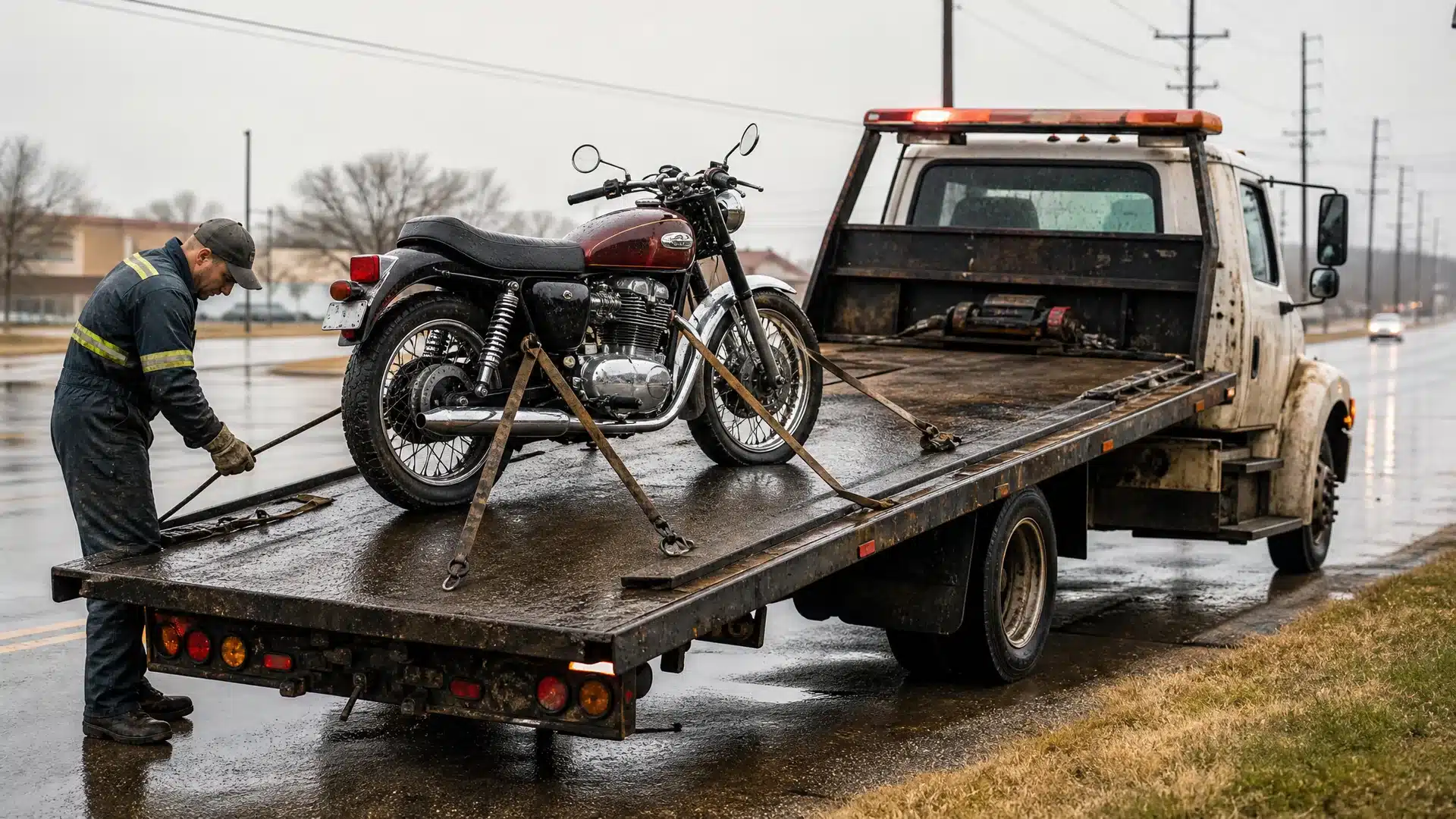
A flatbed keeps all wheels off the ground. No drivetrain stress, no single point taking all the weight. The whole bike rests on a level deck, so the load spreads evenly across the frame instead of concentrating at one lift point. That’s what keeps it from shifting on rough Tulsa pavement or highway expansion joints. Flatbed towing also lets us keep the bike upright, which protects fluids from leaking and keeps the suspension sitting the way it’s supposed to. It arrives in the same shape it left in.
Proper Motorcycle Strapping and Securing Techniques
Getting the bike on the truck is only half the job. Strapping it down right is what determines whether it survives the ride. Bad strapping does more damage than most breakdowns ever would, so technique beats speed every time.
Soft Strap Placement to Protect Paint and Chrome
Metal ratchet hooks touching your motorcycle’s finish is a fast way to ruin paint or chrome. We use soft loops and ratchet straps at the tie-down points the manufacturer actually specifies, not handlebars, not mirrors. Handlebars aren’t structural and can bend under tension, and mirrors will snap the first time you pull on them. Soft loops spread the holding force across reinforced frame sections or the hardpoints listed in your owner’s manual instead. Small step, but it’s what keeps the bike looking the way it did before the tow.
Suspension Compression Standards for Safe Transport
Proper transport means soft strap tie-downs at factory-specified points, with the suspension compressed only 1 to 2 inches. Too much compression blows out fork seals and leaves a permanent sag; too little lets the bike bounce dangerously during braking or turning. An experienced operator knows the spot in between, where the bike sits stable without being crushed down. That’s what soaks up road vibration instead of sending the shock straight into the chassis. We check that tension right after loading, before we ever pull onto the street.
Common Motorcycle Breakdown Scenarios Around Tulsa
Tulsa riders deal with specific trouble spots, and knowing them is half of responding fast. Motorcycle breakdowns show up often on Highway 75 near 71st Street and on I-44 between Yale and Memorial, usually a mix of high speeds and aging pavement.
Flat Tires and Dead Batteries on Highway 75 and I-44
The shoulders along those corridors are narrow and full of debris, which makes a roadside fix risky and often just not doable. A sport bike stuck there sits inches from traffic moving at interstate speed. Cruisers with electrical trouble in South Tulsa usually need to go to a specialty shop rather than a general mechanic. Making the right call on flat tire towing can keep you from attempting a repair you shouldn’t be doing on a busy interstate shoulder. A dead battery might just need a jump. A shredded sidewall from road debris needs a truck. We work these corridors daily, and we know how to position the truck to give you a buffer from traffic while we load.
Accident Recovery and Post-Crash Transport
After a crash, uprighting and loading the bike has to be done carefully, or you make the damage worse. Adrenaline makes everything feel urgent, rushing the recovery is how you end up with a scratched tank or a snapped lever on top of what the accident already caused. We check structural integrity before a single strap goes on, so we’re not pulling against a frame point that’s already compromised. That means stabilizing loose bodywork and containing any fluid leaks before the bike ever touches the deck. It protects what’s salvageable, and it protects what your insurance company needs to see.
What to Expect When Tulsa Wrecker Arrives for Your Bike
You deserve straight communication from the first call to the moment your bike is set down safely. Tulsa Wrecker has run damage-free motorcycle flatbed towing across the Tulsa metro since 2019, under owner-operator Remi Carrillo.
Dispatch starts by confirming your exact location and the type of bike, so we roll out with the right gear already loaded. On arrival, we check for existing damage and document it before we touch anything. Loading follows the same process every time: soft straps, wheel chocks sized for motorcycles, nothing improvised. You get updates along the way, so you’re not left guessing where your bike is. When we arrive, we unload with the same care and make sure it’s stable on the kickstand or center stand before we leave. If it’s urgent, our 24/7 emergency motorcycle towing is ready to roll any time.
Service Coverage Across Tulsa Metro Areas
We cover the whole metro, no extra charge for being in a suburb instead of downtown. Where you broke down shouldn’t decide what kind of service you get.
Fast Response in Jenks, Bixby, and Glenpool
Riders in these southern suburbs are close to our staging areas, with direct highway access to get there fast. Response times stay consistent whether you’re stuck near River Parks or waiting outside Oral Roberts University. Jenks and Bixby have seen more motorcycle traffic as those areas keep growing, and that means more breakdown calls on those same corridors. Glenpool sits along the Turner Turnpike connector, so we can reach a stranded rider there from a few different directions. Knowing the side streets means we can dodge peak-hour congestion instead of sitting in it.
Reliable Bike Towing in Broken Arrow and South Tulsa
Broken Arrow spreads out wide, and South Tulsa’s commercial districts are dense, so recovery looks different in each. We plan around rush-hour bottlenecks on the Creek Turnpike and US-64 rather than getting stuck in them. A rider stranded near a shopping center or apartment complex gets the same flatbed treatment as one on the highway shoulder. South Tulsa’s older streets hide potholes that eat tires, so pickup there takes a little more care navigating in. Our drivers know these neighborhoods well enough to find an obscure address without circling the block.
Choosing a Motorcycle Tow Service You Can Trust
Plenty of companies advertise towing without owning the equipment or training to move a motorcycle safely. Choosing a trustworthy tow provider is worth learning, because it’s what keeps your bike out of the hands of an operator cutting corners.
Questions to Ask Before Booking a Bike Tow
Ask up front whether they run flatbeds and whether the driver actually has motorcycle strapping experience. Ask if they carry soft straps and wheel chocks made for bikes, not just leftover gear from car jobs. Ask when the driver last handled a motorcycle, not just whether they did years ago. Ask about their insurance coverage for cosmetic damage during transport. If they hedge or get vague about their equipment, hang up and call the next name on your list. These questions weed out the operators who treat motorcycles as an afterthought. Checking towing pricing up front also keeps a surprise fee from showing up when you’re already having a bad day.
Why Local Owner-Operator Experience Matters
Corporate fleets rotate drivers constantly, so your bike might land with someone who hasn’t touched a motorcycle in months. A local owner-operator puts his own name on every job, because he answers to the customer directly, not to a shareholder somewhere. Tulsa Wrecker has handled bikes since 2019, and that track record is something a generic operator can’t fake. Owner-operator Remi Carrillo personally takes the motorcycle calls, so the same care follows the job from arrival to drop-off. That accountability is why the equipment stays maintained, the training stays current, and your bike gets treated like it matters. You’re trusting a person who’ll answer the phone next time too, not a dispatch algorithm.
Emergency Motorcycle Towing and Roadside Safety Tips
Get yourself out of harm’s way first. The bike can wait; you can’t be replaced. Calling a flatbed service quickly cuts down how long you’re exposed to traffic on a busy Tulsa road.
Move all the way off the travel lane if you can, even if that means pushing the bike onto grass or gravel. Flip on your hazards and put on reflective gear if you’ve got it, so approaching drivers see you sooner. Stand behind a guardrail or well clear of traffic while you wait. Don’t try to fix anything in an active lane, especially on a highway with a narrow shoulder. Keep your phone charged, and if GPS won’t lock on, describe your location using a landmark or mile marker. A few minutes of caution is what keeps you safe until help gets there.