Your phone is dead, your car is smoking on the shoulder of Highway 75, and your first instinct is to call a buddy with a truck. It feels practical. You trust him, and you’d rather not pay a stranger. But that comfort often hides real mechanical and financial risk. Most modern vehicles can’t handle being dragged behind a pickup without picking up thousands of dollars in drivetrain or electrical damage.
Key Takeaways
- Personal auto insurance typically excludes towing accidents, leaving both drivers personally liable for damages when amateur tows fail.
- Dragging modern unibody vehicles with chains or straps can destroy transmissions, subframes, and bumpers within minutes of transport.
- Electric vehicles and all-wheel drive systems require complete wheel lift to prevent catastrophic electrical or mechanical damage during towing.
- Professional flatbed towing eliminates drivetrain wear and provides insured transport that personal favors cannot match.
- Any vehicle with suspension damage, steering failure, or abnormal transmission behavior requires professional flatbed transport regardless of distance.
You might save money upfront by skipping a professional. But you also risk wrecking the car you’re trying to save. Here’s why calling a friend usually ends up costing more, once you factor in liability, safety, and how cars built after 2010 are actually engineered.
The Real Cost of DIY Towing Risks in Tulsa
Towing a modern unibody vehicle with a chain or strap puts stress on points engineers never designed for it to take. The damage that results often costs more than a professional flatbed tow would have, sometimes by several thousand dollars. Hook a strap to a factory tie-down point on a sedan or crossover, and you’re pulling against thin sheet metal and plastic bumper supports, not a steel frame. We see this around Tulsa regularly: a well-meaning friend yanks a stalled car out of a parking lot at 21st Street and Memorial, and the front fascia rips clean off, or the subframe bends because the force hit it at the wrong angle.
Friend Tow vs Professional Flatbed Comparison
| Factor | Friend Tow | Professional Flatbed | |
|---|---|---|---|
| Insurance Coverage | – | Excluded from personal | Commercial garage keepers |
| Equipment Type | – | Chain or strap drag tow | Full wheel lift flatbed |
| AWD/EV Compatible | – | Risk of drivetrain damage | Manufacturer approved method |
| Liability Protection | – | Personal financial exposure | Company insured transport |
Transmission damage is the quieter killer in amateur tows. If the drive wheels stay on the ground while the engine’s off, the transmission gets no lubrication even as internal parts spin at highway speeds. That can destroy gears and clutches in under ten miles. Putting the car in neutral doesn’t fix this. Neutral only disconnects the engine from the wheels; it doesn’t stop the output shaft from spinning dry inside the gearbox.
Hidden Damage from Towing with a Chain
Modern cars rely on crumple zones and unibody construction to spread impact force across the whole chassis. Those same structures fail badly under concentrated towing loads. A steel chain has zero give, so every bump transfers shock straight into the towed vehicle’s mounting points, potentially warping the frame or cracking the radiator support before either driver notices. Even nylon straps can do damage if they’re rated wrong or hooked to suspension parts never meant to carry that kind of weight.
Liability When Things Go Wrong on Highway 75
Personal auto policies almost always exclude towing accidents involving non-commercial vehicles. That means both drivers could be personally on the hook for damages if a strap snaps on I-44. If your friend’s truck rear-ends your disabled car while braking, his insurer may deny the claim outright, because using a personal vehicle to tow counts as commercial use without the right endorsement. You could end up paying for repairs to two vehicles out of pocket, on top of sorting out who’s at fault between friends.
Professional operators carry commercial garage keepers liability insurance built to cover vehicles in their care during transport. Tulsa Wrecker operates as a local owner-operator service powered by Neptune Towing, focused on damage-free flatbed towing for Tulsa, Jenks, Bixby, and Broken Arrow since 2019. Our insurance actually covers your car while it’s on our deck.
Why Not Tow With a Friend’s Truck: Equipment Gaps
The gap between what a friend’s pickup can do and what your vehicle actually needs is wider than most drivers realize, especially with all-wheel drive or electric powertrains that need a full wheel lift. Your buddy might have a strong truck and plenty of confidence, but strength doesn’t stop mechanical damage when the towing method goes against what the manufacturer specifies for transport. Flatbed versus hook towing differences explain why professionals insist on lifting all four wheels off the pavement for anything beyond a short emergency move.
Flatbed Vs. Hook and Chain Safety
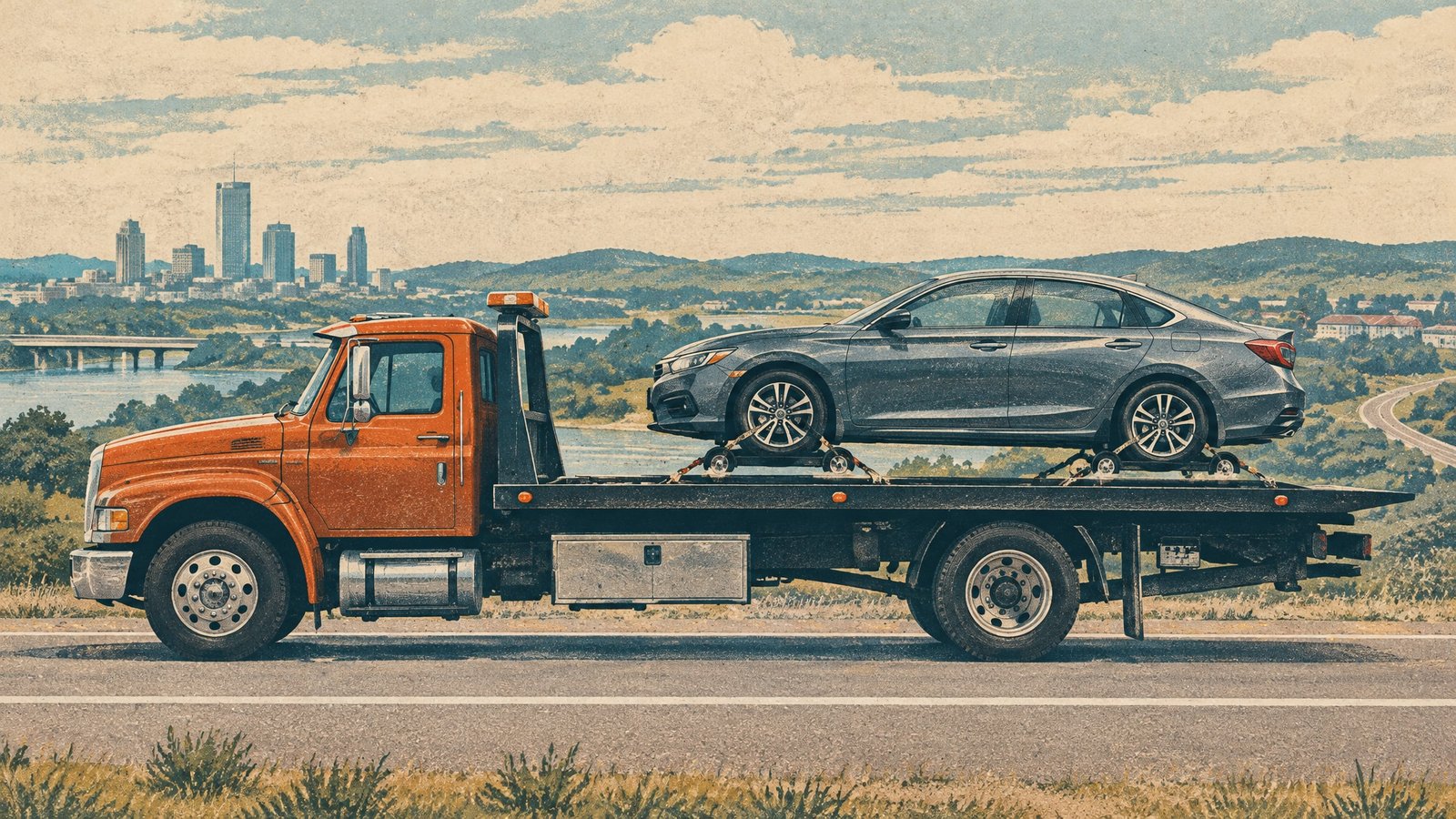
Flatbed towing skips drivetrain wear entirely, because the vehicle rides instead of getting dragged. That’s why manufacturers recommend it for nearly all modern passenger vehicles. Hook-and-chain methods, standard thirty years ago, now pose real risks to cars with low ground clearance, plastic aero panels, and stability sensors mounted near the axles. A flatbed also has its own tie-down points, independent of the vehicle’s structure, so holding force spreads evenly across the deck instead of concentrating on vulnerable frame rails.
Modern Cars Need Specialized Gear
Electric vehicles and all-wheel drive SUVs make amateur towing especially risky. Many EVs don’t have a true neutral, and they generate electricity through regenerative braking even when powered off. Tesla towing requirements and costs explain why dragging an EV can fry its battery management system and void the warranty on the spot. All-wheel drive systems need every wheel turning at the same speed, or none turning at all, which makes dolly towing a no-go unless you disconnect driveshafts or pull fuses most owners can’t find on the roadside.
Lifted trucks and modified vehicles add their own complications around center of gravity and approach angles that standard equipment can’t handle. Towing lifted trucks safely shows why rigging experience matters more than raw horsepower when you’re moving a modified vehicle through Tulsa traffic.
When DIY Towing Goes Wrong: Common Tulsa Scenarios
Amateur towing attempts turn minor breakdowns into major incidents fast, because drivers underestimate how quickly things change on busy roads like South Memorial Drive or the BA Expressway. A flat tire becomes a multi-car accident when a tow strap fails at forty miles an hour, sending the disabled vehicle sideways into traffic while the towing truck keeps rolling, unaware. We see this happen weekly in our area. It almost always comes down to the wrong equipment paired with too much confidence in light traffic or good weather.
Stranded Again After a Failed Tow Attempt
We regularly get calls from drivers whose friend-tow failed halfway to the shop, leaving them stranded worse off than when they started. Broken straps, overheated transmissions, and detached bumpers show up often when amateurs push past safe limits, and each failure adds hours of delay plus repair bills on top of the original problem. Sometimes the second breakdown happens somewhere harder to reach, which means winch recovery or a complex extraction that costs a lot more than the first professional tow would have.
If your vehicle’s stuck in mud or a ditch rather than just disabled on pavement, pulling it free with another passenger car often digs it in deeper and damages the suspension. A professional winch out service uses controlled force and proper anchor points to get stuck vehicles free without the jerking motion that wrecks drivelines and transfer cases.
Safety Risks on Busy Local Roads
Managing a towed vehicle takes constant attention to brake lag, steering response, and communication between drivers. Most amateur setups skip auxiliary lighting, brake controllers, or any reliable way to signal. Drive down Peoria Avenue at dusk with a car trailing behind on a dimly lit strap, and you’ve created a collision risk for everyone around you, especially if the towed vehicle’s brake lights are disconnected or blocked. Professional wreckers use DOT-compliant lighting and wireless brake controllers that sync stopping distances, which is what stops the accordion effect that causes rear-end collisions during amateur tows.
Is It Safe to Tow Your Own Car? Assessing the Situation
Not every breakdown needs a flatbed. But figuring out whether your car can be moved safely without professional help takes an honest look at its mechanical condition, not wishful thinking. If the transmission is doing something it’s never done before and it feels harsh or unsafe, pull over and call a tow truck. Don’t risk more damage by driving or dragging it. That one rule saves drivers thousands in secondary damage that shows up after they’ve convinced themselves the car is “probably fine” despite the warning signs.
Vehicles with suspension damage, steering failure, or compromised brakes should never be towed any way except flatbed, no matter the distance or what equipment is on hand. Electric vehicles with battery warnings or cooling system failures also need professional handling, to keep a thermal event from endangering both drivers and everyone else on the road. When in doubt, assume the car needs professional transport, and get a flatbed towing quote before deciding anything based on a guess.
Moving a car with unknown mechanical issues gambles with safety and money at the same time.
Professional Towing Availability and Response Times
Waiting for a friend to finish work or wake up stretches out your time exposed to roadside hazards and weather, with no guarantee the tow even goes smoothly once he shows up. Professional services run 24/7, which cuts down how long your vehicle sits stranded compared to waiting on a friend who might not pick up at 2 a.m. or on a Saturday. The US vehicle roadside assistance market is expected to grow at a 4.9% annual rate from 2025 to 2034, a sign of just how much drivers are leaning on professional services over informal fixes as vehicles get more complex.
24/7 Coverage Across Jenks, Bixby, and South Tulsa
Local owner-operator services keep steady coverage across the Tulsa metro, because breakdowns don’t care about business hours. Whether you’re stranded at 2 a.m. on Riverside Drive or stuck during rush hour on Highway 75, a direct line to an experienced operator beats trying to coordinate a friend’s availability and hoping his truck is up to the job. Fast response matters most when you’re sitting exposed on the roadside, and a professional dispatcher puts your emergency ahead of anyone’s social calendar.
Why Reliability Matters More Than Saving Twenty Bucks
Whatever you think you’re saving by asking a friend disappears fast once you add up fuel, potential damage, lost time, and the strain a botched tow puts on the friendship. Honest pricing from a local operator cuts out the guesswork and the hidden social debt, and it gives you a cost you can count on along with someone accountable for the job. Paying a fair rate for an expert protects your car and your friendships from the friction that shows up when favors go sideways.
Making the Safe Choice for Your Vehicle and Friendship
Choosing a professional tow protects your car’s mechanical condition and your friendships both, by taking the financial guesswork and liability out of an already stressful moment. Friends mean well, but good intentions don’t replace commercial insurance, the right equipment, or knowing how a modern vehicle actually needs to be transported. When you need help, call (539) 292-3074 to talk directly with Tulsa Wrecker and get straight pricing that respects your budget and your car.
Frequently Asked Questions
What should I say when calling a tow truck to ensure fast dispatch?
Provide your exact location including cross streets or mile markers, describe your vehicle’s make and model, and explain the specific problem such as flat tire, dead battery, or accident damage. Mention whether the vehicle is drivable, if it’s blocking traffic, or if there are injuries so the dispatcher can prioritize appropriately and send suitable equipment.
Can I legally call a tow truck for someone else’s vehicle?
Yes, you can request towing for another person’s vehicle if you have their permission and can provide accurate location and vehicle details. However, the vehicle owner should ideally be present to authorize service and provide payment information, as most companies require direct consent before transporting someone else’s property.
What is the 80% rule for towing capacity?
The 80% rule recommends never exceeding 80% of your vehicle’s maximum towing capacity to maintain safe braking distance, steering control, and transmission longevity. This safety margin accounts for real-world conditions like hills, wind, and emergency maneuvers that demand more capability than flat-highway testing assumes.
Is it safe to tow an all-wheel drive vehicle with a dolly?
No, most all-wheel drive vehicles cannot be safely towed with a dolly because the stationary axle still connects to the transfer case and differentials that require all wheels rotating equally. Flatbed towing is the only universally safe method for AWD vehicles unless the manufacturer explicitly approves dolly towing with specific preparation steps.