Breaking down on Highway 51 or getting a flat tire in an Aspen Creek parking lot is stressful enough without wondering whether the tow truck itself is about to cause more damage. If you drive a modern vehicle with all-wheel drive, low ground clearance, or an electric powertrain, the equipment matters just as much as how fast the truck shows up. You need a towing service Broken Arrow OK drivers can trust to lift the whole vehicle off the pavement, not drag it by one axle. Flatbed towing isn’t a premium add-on for luxury cars anymore. For a lot of today’s vehicles, it’s the only safe way to move them without risking thousands of dollars in drivetrain or suspension damage.
Why Flatbed Towing Matters for Broken Arrow Drivers
Neighborhoods like Aspen Creek, Elgin Park, and the Kenosha corridor have a lot of AWD crossovers and EVs on the road, and those cars need flatbed-specific handling. Their mechanical systems just aren’t built to be dragged. Our general Broken Arrow towing services cover everything from lockouts to fuel delivery, but flatbed transport is the standard for any non-drivable vehicle where mechanical integrity is a concern.
Protecting AWD and Low-Clearance Vehicles
Dragging an all-wheel-drive vehicle can wreck transfer cases and differentials. That’s why flatbed towing is the only method manufacturers actually recommend for a non-drivable AWD car. Even in neutral, the wheels still turn while being pulled, and that engages internal components that aren’t getting lubrication anymore. Friction and heat build up fast. For lowered cars or modified vehicles, which you see plenty of around Tulsa, ground clearance is another problem that rules out wheel-lift trucks.
A wheel-lift truck raises only two wheels. The other set stays on the ground, forcing the bumper or front splitter to carry weight at loading angles that exceed factory specs. We see too many drivers who tried to save money on a standard tow and ended up with repair bills that dwarfed what the tow would have cost. If your car has been lowered or has aggressive body work underneath, keeping all four tires off the asphalt is the only way to guarantee it arrives without scraping.
Avoiding Drivetrain Damage on Modern Cars
Modern transmissions and electronic parking brakes add complexity that older towing methods can’t handle safely. Plenty of newer vehicles don’t have a true neutral that fully disengages the drivetrain, so even a short pull can trigger warning lights or internal faults that need dealership-level diagnostics to clear. Electric vehicles often weigh a lot more than comparable gas cars because of the battery packs, and that means the flatbed needs enough weight capacity and the right tie-down setup to avoid frame distortion.
You deserve a tow operator who understands these mechanical realities before ever hooking up your car. Tulsa Wrecker has run flatbed-only equipment since 2019 under owner-operator Remi Carrillo, specifically to guarantee damage-free transport. That means no guesswork about whether your make and model can handle a wheel-lift, because we don’t use them. Every truck in our fleet carries what’s needed to secure complex vehicles properly, whether you’re driving a brand-new crossover or a vintage sports car.
Damage-Free Towing for EVs and Teslas in Broken Arrow
Electric vehicles bring their own set of challenges, mostly around weight distribution and sensitive high-voltage systems, and that’s where specialized operators separate from general wreckers. Our detailed guide on safe EV towing procedures covers the technical side. The core rule is simple: never tow an EV with wheels on the ground unless the manufacturer explicitly allows it, and only for very short distances at low speeds.
Safe Transport for Electric Vehicle Batteries
The battery pack in an EV sits low in the chassis and doubles as a structural component. Improper lifting points threaten both safety and warranty coverage. Straps or chains placed across the battery casing or high-voltage lines can puncture them, cause coolant leaks, or short the electrical system, and any of those can total the car. We use manufacturer-designated lift points and soft-strap tie-downs built to keep load off sensitive undercarriage components.
Weight matters here too, because EVs often exceed the payload assumptions built into older towing gear. A Tesla Model X or Rivian R1T needs a flatbed rated for heavier loads, with winches capable of a smooth, controlled pull rather than a jerky one. Undersized equipment risks brake failure on the tow truck itself, or damage to the EV’s suspension mounting points during transit.
Manufacturer-Approved Loading Procedures
Every electric vehicle has a transport mode that has to be activated before towing, or regenerative braking will engage and lock the wheels. Skip that step and you can burn out motors or damage inverters when the wheels are forced to turn against resistance during loading. We carry the diagnostic tools and reference materials to put virtually any EV into transport mode safely, even with a dead battery or an unresponsive touchscreen.
This isn’t just a Tesla thing. Hyundai Ioniq, Ford Mustang Mach-E, and other electric models are increasingly common in Broken Arrow driveways, and each manufacturer specifies different anchor points, strap angles, and maximum ramp incline for loading. Skipping those steps might get the car onto the truck a little faster, but it puts your vehicle’s most expensive components at risk.
Local Response Times from Tulsa to Broken Arrow Neighborhoods
When you search for a flatbed tow truck near me, Broken Arrow residents want results based on actual proximity, not keyword games. Our dispatch runs out of South Tulsa, which puts us closer to most Broken Arrow locations than companies staging out of North Tulsa or Sand Springs. Traffic on Highway 51 and the Muskogee Turnpike drives arrival windows more than raw mileage does, so knowing the local shortcuts and current conditions matters.
Coverage Across Kenosha Corridor and Highway 51
The Kenosha corridor and the neighborhoods around it benefit from our position near the highway interchange, which lets us move fast during peak commute hours. Congestion on Elm Street or Washington Street trips up generic dispatchers who don’t know Broken Arrow’s grid, but our operators run these routes daily. We watch traffic conditions in real time and pick the fastest route available rather than trusting GPS suggestions that sometimes route through school zones or construction.
Commercial districts along Olive Avenue and the industrial parks near 41st Street get the same priority, since a breakdown there can block a business or create a safety hazard. You shouldn’t wait hours for a flatbed just because you’re outside someone’s primary zone. We treat Broken Arrow as a primary market, not an afterthought, so response standards stay consistent whether you’re stranded at a shopping center or in a subdivision.
24/7 Dispatch for Emergency Breakdowns
Emergencies don’t check the clock, so our dispatch stays active overnight and on holidays, no automated phone trees, no callback delays. Owner-operator Remi Carrillo runs dispatch directly during critical periods, so decisions come from real-world conditions instead of a script. The person answering your call knows current truck availability, traffic, and what equipment your situation actually needs.
Late-night breakdowns on Highway 51 or I-44 need operators comfortable working in low visibility next to fast-moving traffic. Safety protocols don’t change with the hour, because a tired mistake causes an accident just as easily as a mechanical one does. We staff to stay sharp whether the call comes at noon or 3 AM.
Broken Arrow Towing Company vs. General Wreckers
Not every company advertising in Broken Arrow actually runs a flatbed-exclusive fleet, no matter what the marketing says. Plenty still run wheel-lift trucks for lighter jobs and save flatbeds for premium rates or special requests, so you never quite know what will show up. A dedicated flatbed towing Broken Arrow specialist takes that variable off the table, because every truck in the fleet is set up the same way.
General wreckers tend to prioritize volume over specialization, taking any job that pays regardless of equipment fit. That works fine for a basic sedan, but it’s a real risk for AWD vehicles, EVs, or modified cars where the wrong tow method causes damage immediately. We turn down jobs that fall outside what our equipment can safely handle rather than improvise, because protecting your car matters more than chasing every fee.
Specialization also means carrying the right accessories for the odd situations, from motorcycle wheel chocks for flatbed motorcycle towing to extra-long straps for lifted trucks. General operators often show up missing the right hardware, and then they’re stuck sourcing parts or improvising something unsafe. Our trucks stock a full tie-down inventory because we know exactly what kinds of vehicles we’re going to run into around Broken Arrow.
What to Expect During a Flatbed Tow in Broken Arrow
Anxiety runs high when your car fails on you unexpectedly, so knowing the process ahead of time helps. We talk you through every step because confusion just adds to the stress of an already bad day. Professionalism shows up in the small stuff, like explaining what we’re about to do before we do it, and treating your car with visible care.
Professional Loading and Securing Process
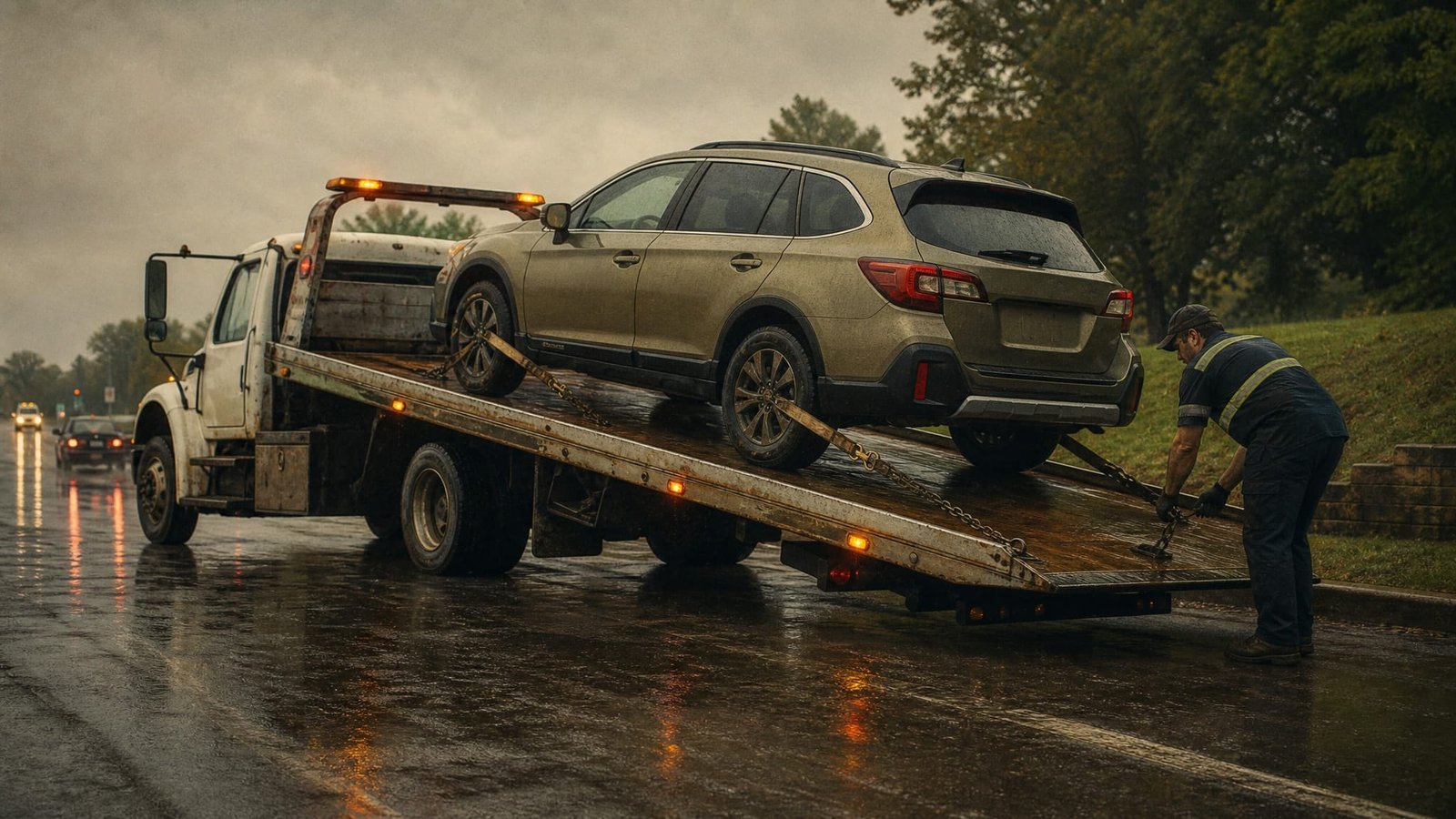
On arrival, the operator checks your vehicle’s condition and picks the right loading approach before deploying ramps or winches. A damaged vehicle may need dollies or skates to prevent further harm getting it on board, while a car that’s simply immobile might roll on under its own power with some guidance. Every securing point gets checked against manufacturer specs, and straps get tension-checked so nothing shifts in transit.
The bed tilts hydraulically to create a gentle loading angle that keeps bumpers and exhaust systems clear of the metal edges. The winch moves slow and steady to avoid a jarring pull that could make existing damage worse. Once the car’s secured, the operator does a final walk-around before raising the bed and heading out.
Transparent Communication and Pricing
Honest pricing starts with a clear quote before any work begins, so there’s no surprise fee once your car is already hooked up. We explain what drives the final cost, whether that’s distance, time of day, or special equipment, so you know exactly what you’re paying for. Predatory operators thrive on ambiguity. We build trust through being upfront, because repeat business and referrals matter more than squeezing a few extra dollars out of someone having a bad day.
Real-time updates keep you posted if traffic delays the arrival or if something comes up during loading. You shouldn’t have to wonder where your truck is or whether anyone remembers your call. Talking directly to the operator handling your job means questions get answered right away instead of bouncing between dispatcher and driver.
When to Call a Flatbed Tow Truck Near Me in Broken Arrow
Knowing when flatbed transport is mandatory versus optional saves you from a costly decision made under pressure. Check our guide on signs your car needs a tow if you’re not sure about your vehicle’s condition, and when in doubt, lean toward flatbed. The price difference rarely justifies risking drivetrain or suspension damage on a modern car.
Signs Your Vehicle Needs Flatbed Transport
Transmission failure, a broken axle, seized brakes, or a steering malfunction all call for full-suspension support, because lifting just part of the car can’t stop further mechanical harm. Accident damage involving frame deformation, wheel misalignment, or fluid leaks needs flatbed handling too, so the movement itself doesn’t make things worse. Any all-wheel-drive vehicle that’s non-drivable qualifies automatically, no matter how minor the damage looks.
Ground clearance below factory spec, whether from a modification or just how the car was built, makes wheel-lift towing physically impossible without scraping something. Luxury vehicles, classics, and high-performance models often specify flatbed-only transport in the owner’s manual to protect alignment and delicate parts. When in doubt, assume flatbed and let the operator confirm otherwise after taking a look.
Roadside Assistance Before the Tow Arrives
Some situations don’t need a tow at all if the problem is minor enough to fix on the spot. Dead batteries, flat tires, an empty tank, or keys locked inside often get solved faster and cheaper through Broken Arrow roadside assistance than a full tow would. We’ll tell you honestly whether you actually need a tow or if something simpler solves it, because earning trust over time beats a quick payday.
Safety decides whether a roadside fix makes sense. Working next to a busy highway or in a dark area can make towing the safer call even for something minor. The operator weighs convenience against risk and calls for transport when working in place would be more dangerous than just loading the car. Sometimes the best service is getting you back on the road without a tow at all, and sometimes it’s recognizing that fixing it roadside is the riskier move.
Trusted Local Owner-Operator Service Since 2019
Tulsa Wrecker is a locally owned business powered by Neptune Towing, and it’s built on community relationships, not corporate metrics. Serving Broken Arrow since 2019 has taught us which intersections flood during storms, which parking garages have tight clearance, and which neighborhoods want quiet professionalism over flashy equipment. That’s local knowledge a national chain rotating through temp staff just doesn’t have.
Owner-operator involvement means accountability reaches the top, because the person whose name is on the business also handles the daily work. Problems get solved personally instead of bounced through layers that dilute who’s actually responsible. We answer the calls, maintain the trucks, train the operators, and stand behind every job, because this business is our name and our livelihood.
Damage-free towing isn’t a slogan here. It’s an operational discipline, backed by the equipment we chose, how we train, and who we hire. Every decision comes down to whether it protects your car, because trust built over years can disappear with one careless mistake.