
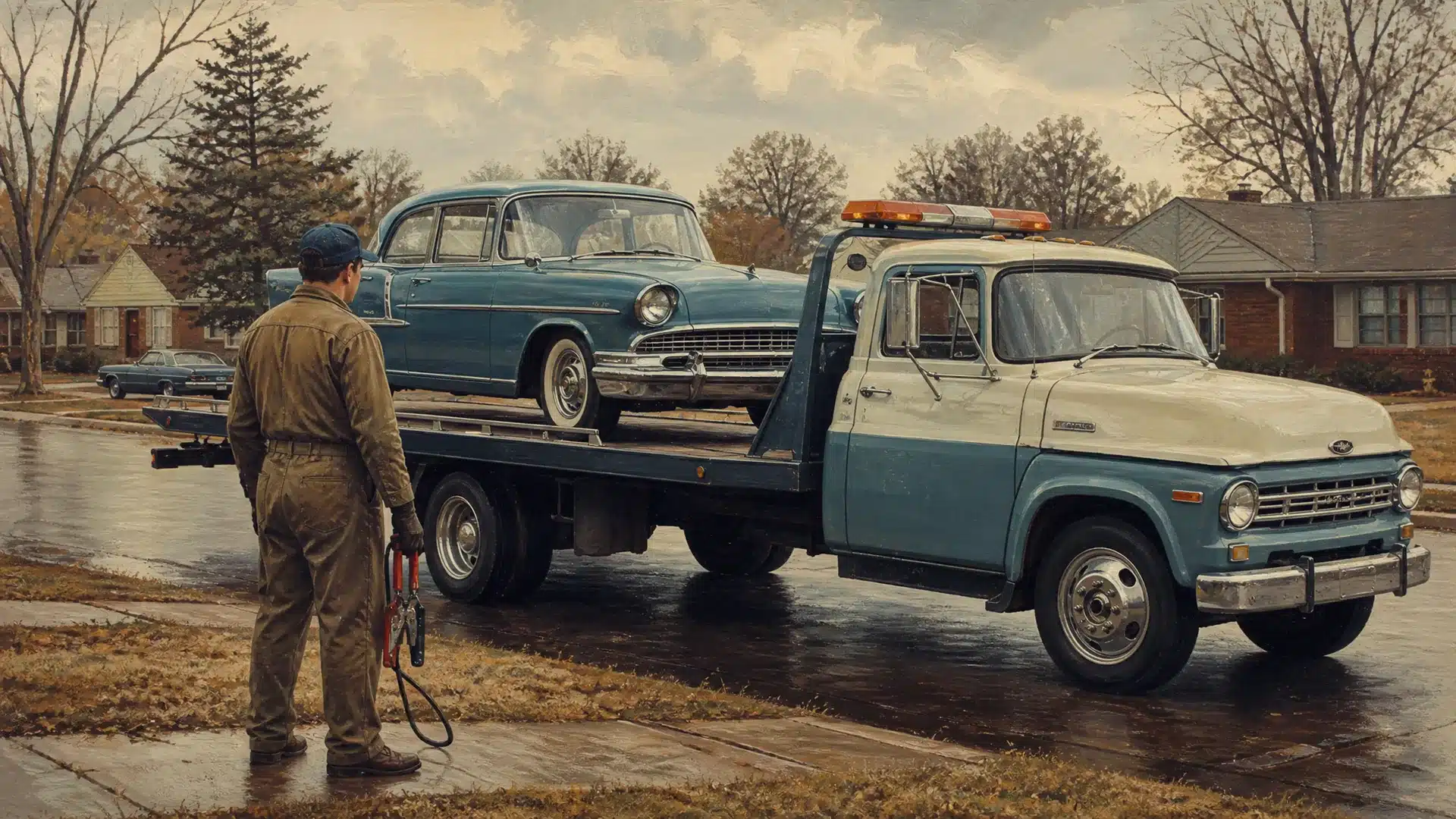
If you’re searching how to jump start a car in Tulsa, you probably need help right now, or you’re smart enough to learn before you do. Either way, you’re in the right place. Tulsa drivers deal with dead batteries constantly, and for good reason. The weather here puts batteries through a stress cycle that most national guides never account for. This guide walks you through the right gear, the correct steps, the hidden warning signs, and exactly when it makes more sense to call a local pro than go it alone.
Why Dead Batteries Hit Differently in Tulsa
Most battery guides are written for some generic American driver in some average climate. Tulsa is not that.
Oklahoma puts your battery through two brutal extremes every single year. Summer broils it. Winter shocks it. Repeat. That cycle shortens battery lifespan faster than in more temperate parts of the country, anyone who’s worked Tulsa roads long enough sees it play out constantly.
Dead battery calls spike during the hottest weeks of summer and again during the first hard cold snaps of winter. That’s exactly the pattern Tulsa Wrecker, powered by Neptune Towing and operating since 2019, sees every year across Tulsa, Broken Arrow, Jenks, Bixby, and South Tulsa.
How Tulsa’s Heat and Humidity Drain Your Battery Faster
Oklahoma summer heat doesn’t just make you uncomfortable, it cooks your battery. Under-hood temperatures on a hot Tulsa afternoon climb well beyond the ambient air temperature outside. That sustained heat accelerates battery fluid evaporation and speeds up internal plate corrosion.
Then November hits and you’re looking at a cold snap in the 20s. A battery weakened by summer heat now has to push through cold-start resistance too. That two-stage stress cycle takes years off your battery’s life. If your battery is already aging, a Tulsa summer or winter is often what finally finishes it off.
What You Need Before You Jump Start a Car Battery in Tulsa
Don’t grab the first set of cables you find at the back of your trunk. The gear matters.
Choosing the Right Jumper Cables
Use cables that are at least 4-gauge, thicker cables carry more current and reduce the risk of the cables overheating mid-jump. Twenty feet is a practical length because it gives you enough slack to position both vehicles without forcing an awkward park job. Cheap, thin cables from a discount bin are a frustration waiting to happen.
A portable jump starter pack is worth keeping in your trunk year-round in Tulsa. These battery packs let you jump your own car without needing a second vehicle, useful when you’re parked alone at Target on 71st or stuck in an empty lot late at night.
You also need a donor vehicle with a good, charged battery. A weak donor won’t have enough reserve power to push a jump start reliably.
Checking Your Surroundings First
Before you touch anything, look at where you are. A parking lot off Memorial Drive is a very different situation from the shoulder of US-75 near 71st Street. A stranded driver on that highway shoulder faces real traffic exposure, road camber issues, and limited safe clearance.
If you’re on a highway shoulder, turn on your hazard lights immediately and stay aware of passing traffic. Oklahoma’s Move Over Law applies to stopped vehicles on the roadside, other drivers are required to give you space. Knowing the law exists is useful, but don’t count on every driver following it. If the location feels unsafe, call for help instead of attempting a DIY jump. For more on handling a highway breakdown, see what to do if your car breaks down on a Tulsa highway.
How to Jump Start a Dead Battery Safely: Step-by-Step
Once you have the right cables, a good donor vehicle, and a safe location, here’s how to do it right.
Connecting the Cables in the Right Order
Get both vehicles positioned so the batteries are close but the cars aren’t touching. Then follow this sequence exactly:
- Red clamp → dead battery’s positive terminal (marked with a + symbol)
- Red clamp (other end) → donor battery’s positive terminal
- Black clamp → donor battery’s negative terminal
- Black clamp (other end) → unpainted bare metal on the dead car’s engine bay, a bolt or bracket away from the battery
That last step matters. Ground the negative cable to bare metal on the dead car, not to the dead battery’s negative terminal. Batteries can off-gas hydrogen, and a spark near the terminal is a real hazard.
Double-check that no cables are drooping near belts, fans, or moving parts.
Starting the Vehicles and Disconnecting Safely
Start the donor vehicle and let it run for two to three minutes before you try to start the dead car. That gives the dead battery time to absorb some charge.
Then try starting the dead vehicle. If it starts, great. If it doesn’t turn over after a couple of attempts, stop, you may have a problem beyond a simple dead battery.
Once running, disconnect the cables in reverse order:
- Black clamp from the jumped car’s engine block
- Black clamp from the donor’s negative terminal
- Red clamp from the donor’s positive terminal
- Red clamp from the jumped car’s positive terminal
Drive the revived car for at least 20–30 minutes so the alternator can recharge the battery. A short loop around the block usually isn’t enough.
Jump Starting in Hot Oklahoma Weather: Extra Precautions
Oklahoma summers add a few extra considerations that national guides skip over.
Before you connect anything, look at the battery case. If it’s visibly swollen, bulging, or cracked, do not attempt a jump start. A damaged case signals internal heat damage, and hydrogen gas buildup near a sparking cable clamp is a known cause of battery explosions. That’s a situation where calling for professional jump-start service in Tulsa is the right move, full stop.
Be careful touching metal components in the engine bay on a hot day. A hood that’s been baking in the sun for an hour can burn you quickly. Let the engine bay cool if you can, or use a rag when handling metal parts.
Keep a portable jump starter pack in your trunk. On a 100-degree Tulsa afternoon in a parking lot with no other drivers nearby, that little pack might be the only help you have. They’re inexpensive and widely available.
When a Jump Start Won’t Fix the Problem
Sometimes you do everything right and the car still won’t cooperate. That’s not user error, that’s the car telling you the problem runs deeper.
Signs the Battery Is Beyond a Jump
If the car starts after a jump but dies again within a few miles, the battery isn’t holding a charge. That’s a battery at end of life, not a temporary drain. If the engine cranks slowly and weakly every time, even with a fresh jump, the battery no longer has the capacity to do its job.
These are common calls Tulsa Wrecker fields. The driver gets a jump from a neighbor, makes it to QuikTrip on Peoria, and dies again in the parking lot. At that point, the battery needs to be replaced, not jumped again.
Other Culprits: Alternator, Starter, or Something Else
A dead battery is the obvious suspect, but it’s not always the guilty party.
If the alternator has failed, the battery won’t recharge while you drive, so the car dies again shortly after a jump start. That mimics a bad battery and confuses a lot of drivers.
A rapid clicking sound when you turn the key usually points to the starter motor, not the battery. A single loud click with no crank can mean the same thing. These problems won’t respond to jumper cables, no matter how good your cables are or how strong your donor vehicle is.
Knowing when to call a tow truck instead of retrying a jump start saves you time, frustration, and sometimes additional damage to the vehicle.
When to Call for Dead Battery Assistance in Tulsa Instead
DIY jump starts work great in the right conditions. But a lot of real Tulsa situations don’t fit the textbook scenario. Call for help when:
- You don’t have a donor vehicle and your portable pack isn’t charged or available
- The battery case is visibly swollen or cracked, don’t risk it
- You’re stranded on a busy road like I-44, US-75, or the Creek Turnpike where standing outside your car is genuinely dangerous
- It’s late at night and you’re alone in an unfamiliar area
- You’ve already attempted a jump and the car won’t hold a charge
- You hear clicking but no crank, that’s a starter or electrical issue, not a battery problem a jump will fix
- You’re just not comfortable doing it, that’s a completely valid reason
Tulsa Wrecker responds fast across Tulsa, South Tulsa, Broken Arrow, Jenks, and Bixby. If you’re stuck and need dead battery assistance in Tulsa, give us a call at 539-292-3074. We’ll get there, sort out what’s actually wrong, and handle it without the guesswork.
If the situation has gone beyond a jump start and you need a tow to a shop, we handle that too. 24-hour towing and roadside help in Tulsa is what we do, day or night, weekends included.
And if you’re dealing with a flat on top of everything else, flat tire help in Tulsa is part of what we offer on a roadside call. Sometimes one bad day stacks up fast. We get it. Just call.