
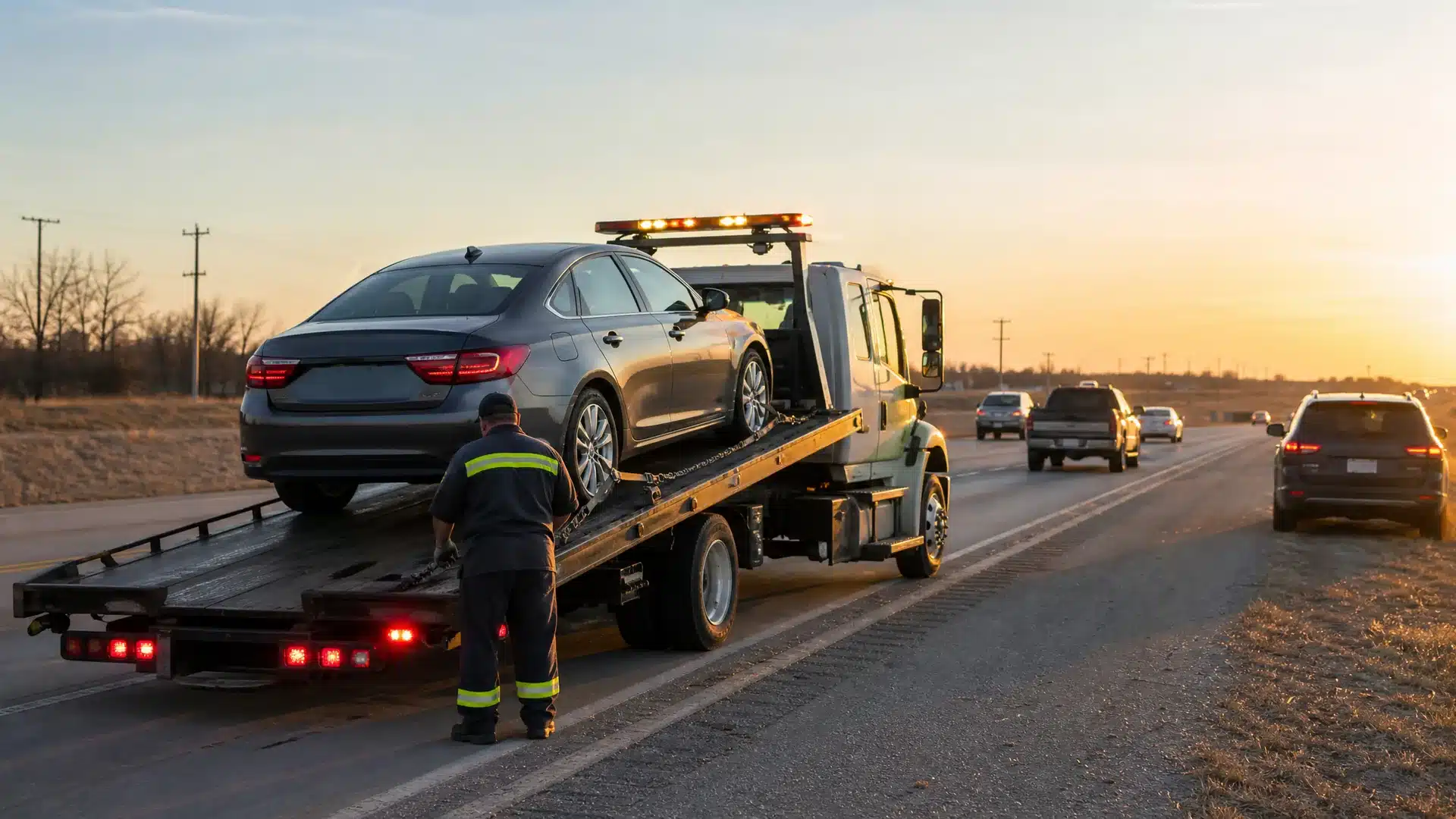
If you’ve driven through Tulsa long enough, you’ve seen it: flashing lights on the shoulder, a tow truck angled to block traffic, cars zipping by just a few feet away. That scene is exactly what Oklahoma’s Slow Down Move Over law was written for. Whether you’re headed down the BA Expressway or crawling through construction on US-75, knowing this law isn’t just about avoiding a ticket. It’s about keeping the people working on the shoulder alive.
What Is the Slow Down Move Over Law in Oklahoma
Oklahoma’s Slow Down Move Over law is pretty simple once you break it down. When you approach a stopped vehicle with flashing lights on the side of the road, you have to move over one lane if you can do it safely. If changing lanes isn’t possible because of traffic or road conditions, you slow down well below the posted speed limit instead.
That’s the whole idea. Give the people on the shoulder some room and some time to react. Oklahoma’s move over law requirements lay out exactly what the law says, lane by lane, if you want the deeper breakdown of the statute.
Which Vehicles Are Covered
A lot of Tulsa drivers assume this law only covers police cars. It doesn’t. It applies to any stopped vehicle running flashing lights, including:
- Police, fire, and EMS vehicles
- Highway maintenance and utility trucks
- Tow trucks and roadside assistance vehicles
That last one matters more than most people realize. Tow operators spend hours a week parked on active shoulders. They need the same buffer of space as any first responder.
Why Tulsa Tow Truck Drivers Depend on the Move Over Law
Our drivers set up on shoulders along the Broken Arrow Expressway and US-75 several times a week. The difference between a driver who slows down early and one who doesn’t is obvious from the truck. When traffic gives space, hooking up a vehicle is routine work. When it doesn’t, every hookup turns into a balancing act between speed and safety.
Highway 169 is another spot where this plays out constantly, especially during rush hour when lanes narrow near interchanges. A stopped tow truck there isn’t just an inconvenience for the driver behind it. It’s a hazard for the operator standing between two vehicles, often with his back partly turned while he works.
Roadside workers, including tow operators, face a higher risk of getting struck by passing traffic during otherwise routine stops than most people realize. That risk is why the move over law exists in the first place. It’s why tow crews treat every roadside job like it could go wrong if drivers aren’t paying attention.
What Happens If You Don’t Slow Down or Move Over
Failing to move over or slow down isn’t a minor technicality in Oklahoma. Police can pull you over and cite you for it, the same way they would for any moving violation. They treat it seriously because it puts real people, not just property, at risk.
Fines and Penalties in Oklahoma
The exact penalty depends on the circumstances, but a Slow Down Move Over citation generally comes with a fine and can add points to your driving record. If the violation leads to a crash involving a roadside worker, the consequences get a lot more serious, both legally and financially. Repeat violations tend to carry steeper penalties than a first offense, too.
The bottom line: it’s cheaper, safer, and less stressful to just give the lane a little room than to find out what a citation costs after the fact.
How to Safely Slow Down and Move Over on Tulsa Highways
Good move-over habits start before you’re anywhere near the flashing lights. A few things that help:
- Check your mirrors early, well before you reach the stopped vehicle
- Signal your intent to change lanes as soon as it’s safe
- Ease off the gas gradually instead of braking hard at the last second
- Give extra distance if the shoulder looks narrow
A stop near the Creek Turnpike on-ramp with no shoulder to spare is a completely different job than a wide stretch of I-44. Our operators adjust cone placement and body position depending on the road. But they can’t control what the lane next to them is doing. That part is on the drivers passing by.
When You Can’t Change Lanes
Sometimes traffic is too heavy to merge safely, especially during rush hour on I-44 or the Creek Turnpike. In that case, the law doesn’t expect you to force a lane change. It expects you to slow down.
Ease off your speed well before you reach the stopped vehicle, and hold that reduced speed until you’ve fully passed it. Even a modest drop in speed gives a roadside worker more reaction time and more margin for error. That margin is often the whole difference between a routine stop and a close call.
What to Do If You’re the One Stopped on the Shoulder
If your car breaks down or you’re involved in a fender bender, how you handle those first few minutes on the shoulder matters. Turn on your hazards immediately, even before you’ve fully stopped. Stay inside the vehicle with your seatbelt on if you’re in a safe spot to do so, rather than standing outside near traffic.
Call for a tow as soon as you can, rather than waiting to see if the problem sorts itself out. The faster a truck gets to you, the less time you spend exposed on an active shoulder. That’s true whether you’re dealing with a flat, a mechanical issue, or something as simple as a dead battery towing or a jump start situation.
If you were in a crash, there’s a bit more to think about beyond just calling a tow truck. Our page on what to do after an accident walks through those extra steps. And if you’re not sure whether your car even needs a tow in the first place, signs your car needs a tow can help you make that call before you’re stuck on a shoulder deciding under pressure.
Owner-operator Remi Carrillo built Tulsa Wrecker’s roadside protocol around one assumption: treat every stopped shoulder job as if traffic isn’t going to move over, because that’s the safest bet. It’s a hard way to run a business. But it’s kept crews safe on some of Tulsa’s busiest roads since 2019.
Move Over Law FAQs
What does Oklahoma’s Slow Down Move Over law actually require?
It requires drivers to move over one lane away from a stopped vehicle with flashing lights, if it’s safe to do so. If you can’t change lanes, you have to slow down significantly instead.
What happens if you get pulled over for not moving over?
You can get cited and fined, and the violation can add points to your license. Penalties increase if the violation involves a crash or if it’s a repeat offense.
What should you do if you can’t safely change lanes?
Slow down well before you reach the stopped vehicle and hold that reduced speed until you’ve passed it completely. Don’t force a lane change into heavy traffic just to comply with the letter of the law.
Does the Law Apply to Tow Trucks and Roadside Assistance Vehicles
Yes. The law covers any stopped vehicle displaying flashing lights on the roadside, and that includes tow trucks and roadside assistance vehicles, not just police, fire, and EMS. Our Tulsa highway safety guide covers this in more detail if you want to see how it applies across different Tulsa roads.
If you ever find yourself stopped on a Tulsa-area shoulder, save Tulsa Wrecker’s number: 539-292-3074. We’re a local owner-operator crew, and fast, damage-free towing is what we’ve built our name on since 2019. For a broader look at how we handle roadside calls across the metro, check our complete Tulsa wrecker service guide. And whether you’re the one broken down or the one driving past, slowing down and moving over is a small habit that keeps everybody on Tulsa’s highways a little safer.