Your check engine light flickers on during a Friday night surge near the Gathering Place. That’s not just car trouble. That’s earnings disappearing by the minute. Standard towing companies treat rideshare drivers like any other stranded motorist, but your timeline and your vehicle are different from someone commuting home from work. Towing for Uber and Lyft drivers in Tulsa means getting you back online, or safely off the road, without wrecking your rating in the process.
Key Takeaways
- Tulsa Wrecker targets high-density rideshare zones including South Tulsa, Jenks, Bixby, Broken Arrow, and Glenpool for faster response during peak earning hours.
- Flatbed towing is standard for all rideshare vehicles to prevent drivetrain and bumper damage common with hook-and-chain methods on modern sedans and EVs.
- Direct communication with a local operator eliminates call center hold times and provides accurate ETAs based on real-time Tulsa traffic knowledge.
- Roadside assistance triage distinguishes between fixable issues and true failures, potentially saving your shift from ending prematurely over minor problems.
- Transparent upfront pricing protects gig worker margins by eliminating hidden hook-up fees and surprise mileage charges after arrival.
Tulsa Wrecker works with working drivers in mind. We run damage-free flatbed towing and fast roadside assistance across South Tulsa, Jenks, Bixby, Broken Arrow, and Glenpool. Every minute your wheels aren’t turning is money lost, so our local owner-operator model leans on fast response times and honest communication instead of an automated dispatch queue. Whether you drive a Prius, a Tesla, or a standard sedan, you need a partner who respects your vehicle and your livelihood.
Why Rideshare Breakdown Towing in Tulsa Requires a Different Approach
Standard consumer towing works calls by proximity alone. That often leaves gig workers waiting hours during peak fare windows, right when demand is highest and traffic is worst. You can’t sit on the shoulder of US-75 while a national dispatcher cycles through unrelated jobs. Your acceptance rate and your passenger ratings depend on being reliable and available. A breakdown for you is a business interruption, not an inconvenience, and this segment needs a provider who treats it that way.
Local Operator vs. National App Comparison
| Feature | Tulsa Wrecker | National App | |
|---|---|---|---|
| Dispatch | – | Direct operator contact | Automated call center |
| Pricing | – | Upfront transparent quote | Variable post-service billing |
| Equipment | – | Flatbed standard for all | Mixed fleet availability |
| Routing | – | Real-time local knowledge | GPS-only estimates |
The Real Cost of Downtime for Gig Drivers
Downtime costs more than the price of the tow once you count lost surge pricing, missed bonuses, and getting dinged for going offline unexpectedly. A three-hour wait during evening rush hour can mean missing out on real money you’d otherwise be making. Rideshare breakdown towing in Tulsa has to treat your call with the urgency of an emergency room visit, not a routine parking lot retrieval.
Discreet Service That Protects Your Rating
Your passengers and the platform’s algorithm don’t care whether it was a mechanical failure or poor planning. How your vehicle gets handled reflects on your standing either way. Show up at a pickup on a flatbed, or get caught doing a visible roadside repair, and you can trigger cancellations and bad feedback that takes weeks to rebuild. Professional handling means showing up fast and quietly handling the problem, so your reputation stays intact even when your car doesn’t.
Fast Response Times Across South Tulsa and Broken Arrow
Local dispatch lets operators navigate Tulsa traffic patterns and construction zones better than national call centers that rely on GPS alone, and GPS alone often misses real-time congestion on I-44 or a surface street closure. Stuck near the Broken Arrow Expressway during shift change? You need someone who knows the alternate routes and current lane restrictions, not an algorithm guessing an arrival time off outdated map data. That local knowledge means faster arrivals for drivers working the high-density zones.
Coverage from Jenks to Glenpool During Peak Hours
Our coverage targets the high-density rideshare zones: South Tulsa, Jenks, Bixby, Broken Arrow, and Glenpool. These areas generate most of the ride requests, and they see the most mechanical failures too, thanks to constant stop-and-go driving and high mileage. With resources already positioned in these corridors, an Uber driver tow truck in Tulsa is rarely more than a few miles out when you need one.
Navigating Tulsa Traffic for Quicker Arrivals
National apps often route trucks through congested arteries because they don’t know about local events, school zones, or temporary roadwork slowing things down. Our operators live and drive here every day. We know that Peoria Avenue can be slower than cutting through residential streets at certain times. That’s the kind of thing that gets us to gig driver car trouble in Tulsa faster than a system that treats our city as a grid of abstract lines.
Damage-Free Flatbed Towing for Modern Rideshare Vehicles
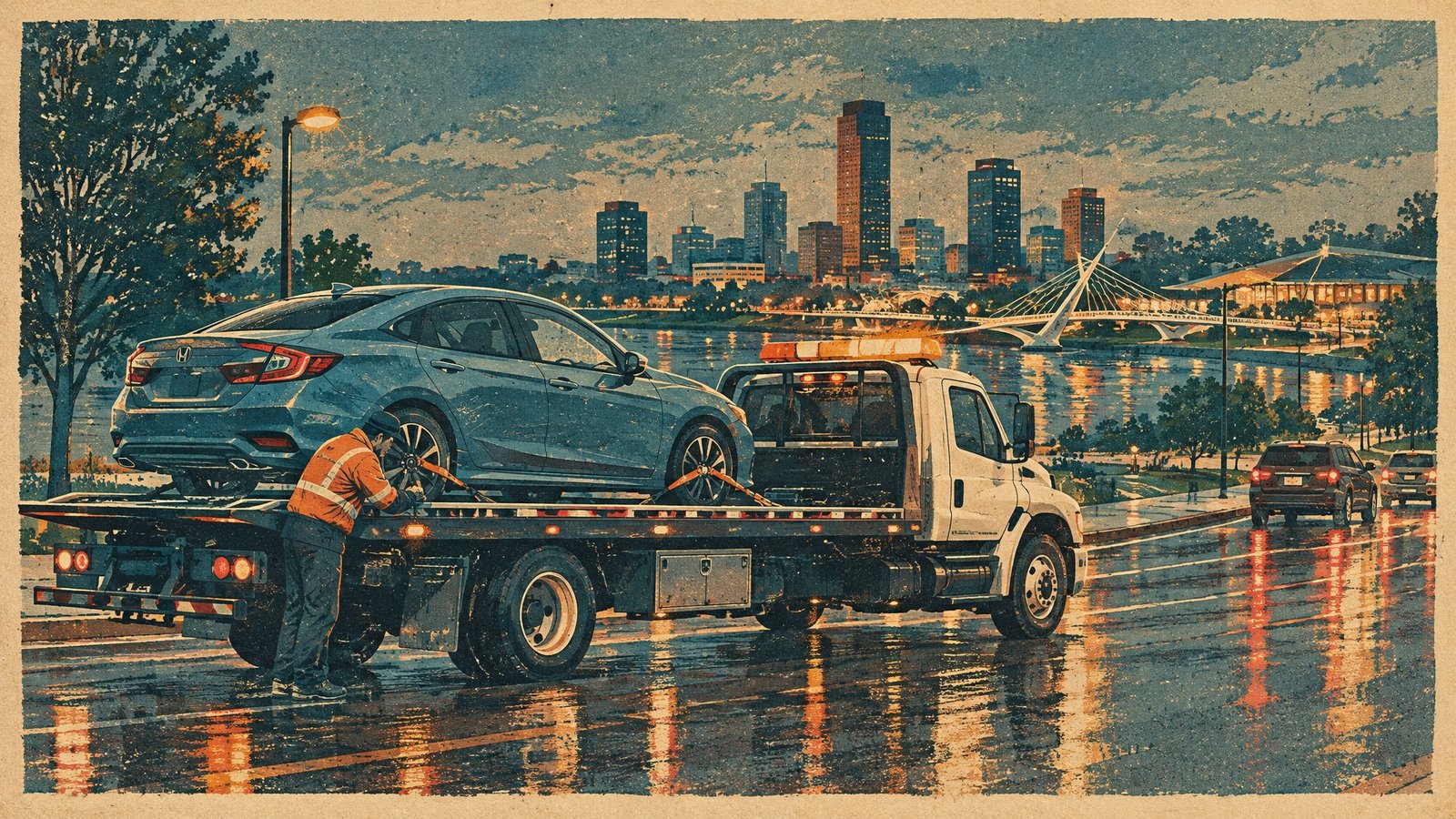
Flatbed towing is standard for all rideshare vehicles because hook-and-chain methods are rough on the drivetrains of modern sedans and electric cars, and that protects your primary income source from a repair bill you didn’t plan for. Plenty of gig-economy vehicles have low ground clearance, complex suspensions, or electric drivetrains, and all of that is easy to damage with improper lifting or dragging. Use anything short of a proper flatbed, and a minor breakdown can turn into a financial loss that sidelines you for weeks.
Protecting Low-Clearance and EV Fleet Cars
Modern rideshare fleets lean more and more on electric vehicles and aerodynamic sedans, and those need specialized loading procedures so you don’t damage a battery pack, a bumper, or alignment components. If you drive an EV, you already know EV towing cost details can climb fast if the operator doesn’t have the right equipment or training for high-voltage systems. The right flatbed protocol means your car arrives at the shop in the same shape it left the roadside in, no new scratches, no added mechanical stress.
Why Hook-and-Chain Risks Your Livelihood
Hook-and-chain wreckers were built for heavy steel frames, not the unibody construction and plastic aero kits on today’s fuel-efficient fleet vehicles. One careless lift can crack a bumper, bend a control arm, or damage sensors that cost hundreds to replace and recalibrate. Your car is your business tool. Trusting it to outdated equipment is a gamble that rarely pays off when margins are already thin.
Roadside Assistance vs. Full Tow: Getting Back Online Faster
Not every breakdown means a trip to the shop. Knowing the difference between a quick fix and a real mechanical failure can save your whole shift. Dead batteries, flat tires, locked keys, these often just need quick roadside help that gets you back online in thirty minutes instead of hours at a repair shop. A proper look on scene stops an unnecessary tow from ending your workday early and costing you both a service fee and lost fares.
A good operator can tell whether your issue is truly immobilizing or just a temporary setback that gets fixed curbside, without you leaving your active zone. That’s the difference between real roadside assistance and plain hauling: options instead of ultimatums when trouble hits mid-shift. Sometimes the fastest way back to earning is a jump start or a tire swap, not a flatbed ride across town.
Local Owner-Operator Service Vs. National Towing Apps
Automated dispatch forces you through scripted menus and hold times while you sit exposed on a busy road. Talking straight to a local operator closes that dangerous gap. You deserve to speak with someone who knows Tulsa geography and can give you a real ETA based on actual conditions, not an optimistic algorithm. That human connection cuts the anxiety and means your situation gets understood the first time, not after you repeat it to three different people.
Direct Communication Without Call Center Delays
Call Tulsa Wrecker at 539-292-3074 and you reach someone who knows the difference between Riverside Drive and River Parks, not a remote center reading off a script. That direct line cuts through the noise and puts you in touch with someone who can adjust routing in real time based on your exact location and vehicle type. For working drivers, that kind of clarity and speed beats any app discount that comes with an unpredictable wait.
Transparent Pricing for Independent Contractors
Gig workers run on thin margins, and a surprise fee can wipe out a whole day’s profit. That’s why honest, upfront pricing matters more than a promo rate that balloons once the truck shows up. We give you a clear quote before dispatch, so you can decide whether to tow or try a roadside fix. No hidden hook-up charges, no mileage surprises. Trust comes from a quote you can count on, not fine print.
You can see where direct service beats an automated alternative in our local tow truck vs national app comparison, which breaks down the real differences in response time and accountability. Independent contractors deserve a partner that understands independence, not a platform that treats you like interchangeable inventory.
What to Do While Waiting for a Tow on Active Routes
Safety comes before earnings. Get your vehicle fully off the travel lanes and hit your hazard lights before you check damage or make a call. Stay inside with your seatbelt fastened if you’re on a highway shoulder, or stand well clear of traffic if you’re in a parking lot or on a side street. Following safe steps while waiting for help protects you and keeps your car from catching a second hit while help is on the way.
Keep your phone charged and stay visible to approaching emergency vehicles. Don’t accept a ride from a stranger, and don’t try repairs in an active traffic lane. Snap photos of the scene for insurance and platform support, and note the exact cross streets or mile marker so the responder finds you faster. Your safety isn’t negotiable, and no fare is worth an injury, or a bad situation made worse by impatience.
Reliable Towing Support for Tulsa Gig Workers Since 2019
Tulsa Wrecker has run as a local owner-operator service since 2019, built specifically around what working drivers need instead of general consumer towing. Founded by Remi Carrillo and powered by Neptune Towing, we were built on the idea that gig workers face pressures a generic towing service just doesn’t address. That track record means we’ve seen just about every kind of rideshare breakdown there is, and we’ve refined how we handle it to cut your downtime and protect your vehicle.
We specialize in flatbed towing in South Tulsa and the surrounding communities, because that’s where our neighbors work and live. Save our number, 539-292-3074, in your contacts now, or book a tow without hold times so you’ve got verified local help lined up before your next shift starts.
Frequently Asked Questions
How quickly can a tow truck reach me in South Tulsa during peak hours?
Response times vary based on exact location and current traffic conditions, but our local dispatch prioritizes gig drivers in high-density zones like South Tulsa, Jenks, and Broken Arrow. Unlike national apps that rely on GPS estimates, our operators use real-time knowledge of construction and congestion to find the fastest route. Calling directly at 539-292-3074 gives you an accurate ETA from someone who knows the area.
Is your flatbed equipment safe for my Tesla or low-clearance EV?
Yes, flatbed towing is standard for all rideshare vehicles specifically to protect low-clearance cars and electric drivetrains from damage. Our operators are trained in proper loading procedures for EVs to avoid battery pack or sensor damage that hook-and-chain methods risk. This damage-free protocol ensures your vehicle arrives at the shop in the same condition it left the roadside.
Can roadside assistance fix my problem without ending my shift?
Many common issues like dead batteries, flat tires, or lockouts can be resolved curbside in under thirty minutes, allowing you to get back online quickly. Our operators assess whether your situation requires a full tow or just a quick fix, preventing unnecessary trips to the shop. This triage approach saves you both the towing cost and lost revenue from extended downtime.
Will I get a clear price quote before the truck arrives?
We provide transparent upfront pricing before dispatch so you can make informed decisions without worrying about hidden fees or surprise charges. Gig workers operate on thin margins, and we respect that by quoting honestly based on your location and vehicle type. There are no bait-and-switch tactics or add-ons that appear only after arrival.
What makes local owner-operator service faster than national towing apps?
Local operators navigate Tulsa traffic using real-time knowledge of construction, events, and surface street shortcuts that GPS-only systems miss. Direct communication eliminates call center hold times and scripted menus, putting you in touch with someone who can adjust routing instantly. This combination of geographic expertise and human decision-making consistently beats automated dispatch during peak congestion.