
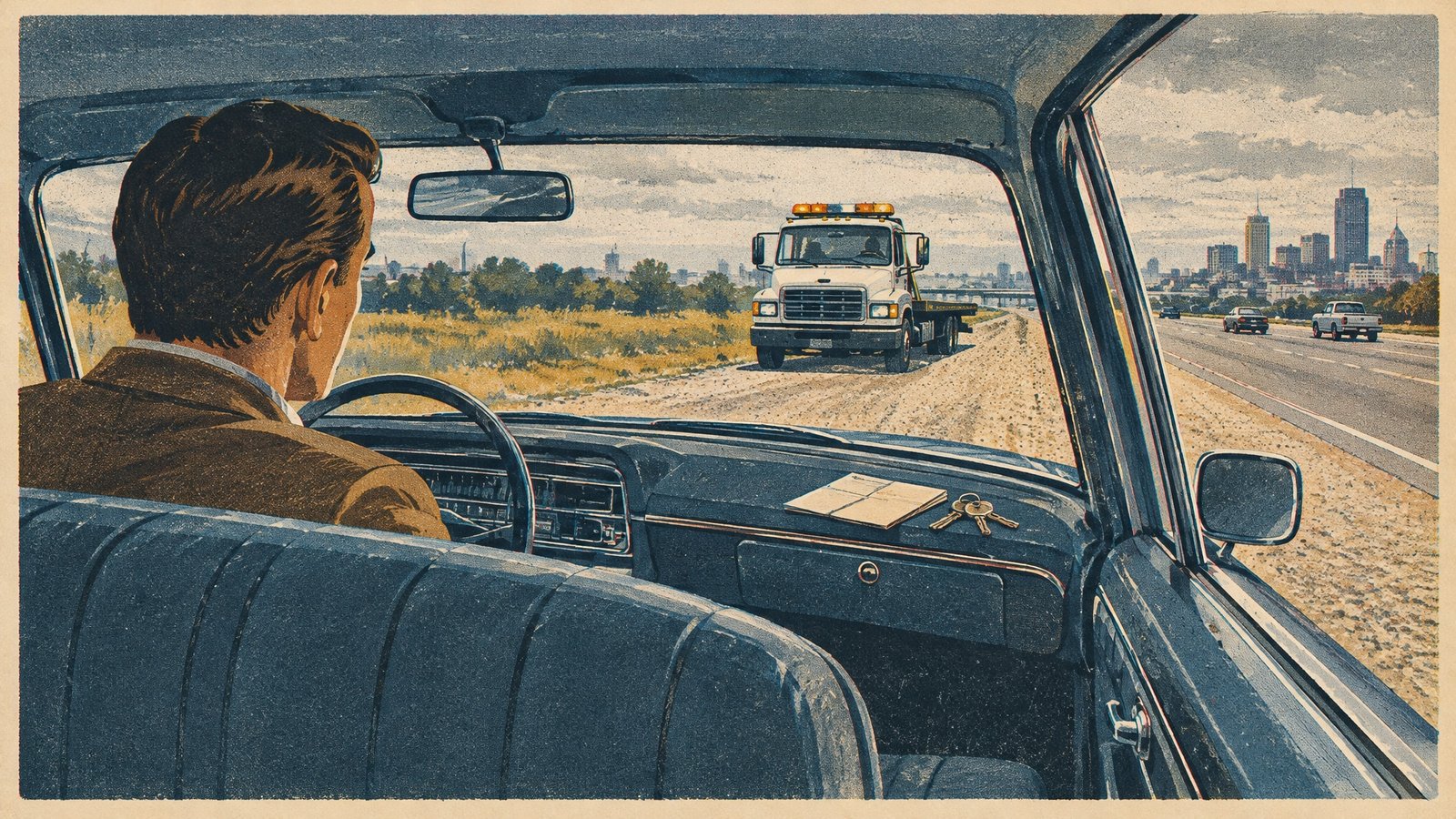
Breaking down on a Tulsa highway is stressful. But panic causes more accidents than the actual mechanical failure does. Knowing what to do while you wait for a tow truck keeps you safe, and it helps your operator get you moving faster once they show up. Here’s what local drivers should do between the breakdown and the hookup, from getting off the road to handling the wait itself.
Key Takeaways
- Staying inside a locked vehicle is generally safer than standing roadside on high-speed Tulsa highways unless a solid physical barrier exists.
- Wait times for Tulsa towing typically range from 20 minutes to an hour depending on traffic volume and specific location.
- Gathering registration, insurance, and exact location details before the operator arrives significantly reduces roadside exposure time.
- Direct communication with local owner-operators provides more accurate ETAs than app-based dispatch systems during peak demand.
Secure Your Vehicle on Tulsa Roads First
Your first job is getting your vehicle out of active traffic lanes without creating a new hazard in the process. Stopping in a travel lane on Highway 75 or I-44 during rush hour invites a rear-end collision that’s often worse than whatever broke down in the first place, so that shoulder needs to happen fast.
Getting Off the Travel Lanes Safely
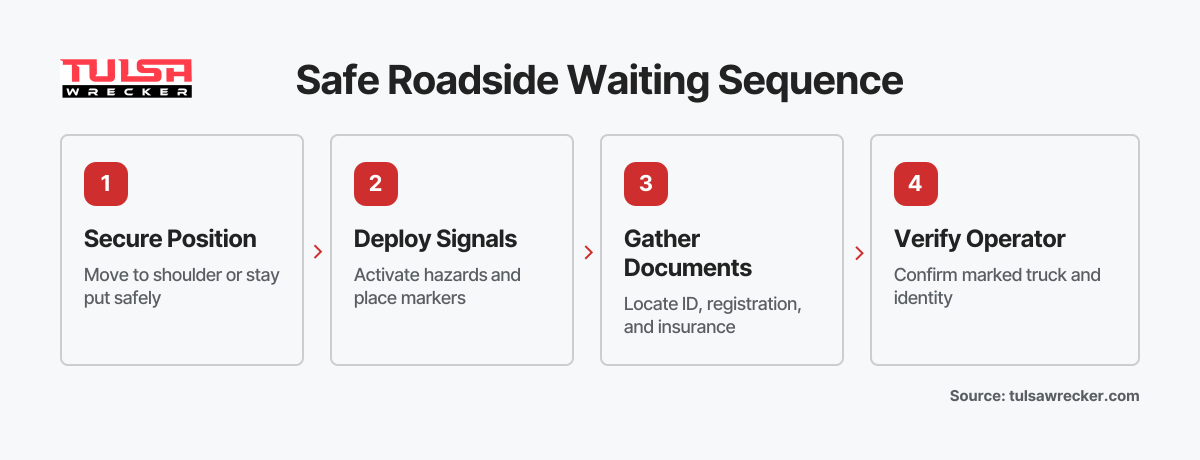
Coast to the right shoulder or an exit ramp if you’ve still got momentum and steering. Turn your wheels away from traffic once you’re stopped, so a rear impact pushes you further off the road instead of into the next lane. Can’t reach a safe spot under your own power? Stay exactly where you are with your hazards on. Pushing a disabled car across live lanes is how people get hurt.
When to Stay Put Versus Move
Limping a damaged vehicle to the next exit often finishes off a transmission or a tire that stopping sooner would have saved. Only move the car if it gets you completely clear of traffic without excessive speed or distance. If moving means merging unsafely or driving on a rim, hazards on and stay put.
Roadside Safety While Waiting for Help
Towing pros generally agree that staying inside the vehicle with your doors locked is safer than standing on the shoulder of a high-speed Tulsa corridor, unless there’s a solid barrier between you and traffic. The gap between your door and a guardrail protects you in a way that standing near the pavement never will, especially with distracted drivers drifting onto shoulders.
Stay Inside or Stand Clear?
Staying buckled in your seat keeps you out of the way of passing traffic and visible to approaching emergency vehicles. Only get out if there’s a real barrier, a concrete wall or a deep ditch, between you and the road, and exit through the passenger side, away from traffic. Standing directly in front of or behind your car means you’ll get hit if another vehicle strikes yours from either direction.
Using Hazard Lights and Markers Effectively
Hazard lights are the first thing a tow truck looks for, so keep them on even in daylight. Set reflective triangles or flares at least a hundred feet behind your vehicle on highways, further back on curves or hills where sight lines shrink. At seventy miles an hour, brake lights alone don’t give a driver enough warning. Triangles and flares do.
What to Have Ready for Towing Arrival
Pulling your information together before the operator arrives means no fumbling around at the roadside, and it speeds up the whole recovery. Having things organized also respects the driver’s time and cuts down the minutes you’re standing near traffic during intake.
Gathering Registration and ID
Find your driver’s license, registration, and proof of insurance while you’re waiting safely inside the car. Do it now instead of digging through the glovebox later, when you should be watching traffic and talking to the operator. If your registration’s expired or missing, mention it upfront so dispatch can tell you what else they’ll need before the truck rolls.
Communicating Your Exact Location
GPS drops out a lot around Jenks and Bixby, so have cross streets, mile markers, or landmarks ready to give dispatch. Tell them your position relative to an exit, an overpass, or a business. That gives the driver something real to work with when the map just shows empty space. Clear details keep the operator from driving past you, or stopping on the wrong side of a divided highway.
Managing Wait Times and Expectations
Waiting for a tow truck might take 20 minutes or an hour, depending on traffic and location. Patience is part of roadside safety, because frustration is what pushes people into bad calls, like flagging down a stranger or trying a repair in live traffic.
Local operators who know Tulsa’s traffic patterns give you a more honest estimate than a national dispatch center routing your call through some call center three states away. A delay caused by an accident on I-44 or peak commuter traffic isn’t the same as neglect, and knowing that helps you keep your expectations realistic. Staying calm and aware matters no matter how long the wait runs.
Avoiding Common Mistakes During Roadside Waits
The longer you’re stranded, the more exposed you are, so stick to the basics until help you’ve actually verified shows up. Distressed motorists draw the occasional opportunist, so it’s worth knowing the difference between real help and someone just working an angle.
Why You Should Not Accept Unmarked Rides
Don’t accept a ride from anyone you haven’t verified, even if they claim to be with your towing company. A legitimate operator shows up in a marked truck with clear company identification, and they will never ask you to leave your vehicle with a stranger. Lock your doors, wait for the specific truck dispatched to your call, and confirm the driver’s identity through your phone or by calling dispatch directly.
Keeping Pets and Passengers Safe
Kids and pets stay secured inside the vehicle, or well behind a real barrier, never near the roadway. It only takes a second of a kid mistaking the shoulder for a play area for things to go wrong. Keep everyone calm and contained until the tow truck arrives and the operator says it’s safe to get out.
Preparing for a Damage-Free Hookup
Clear personal items out of the way before the truck shows up so the flatbed operator isn’t working around clutter or your valuables. It’s a small thing, but clearing the trunk and interior shows some consideration for the person about to handle your car.
Mention anything unusual, like EV transport mode or lowered suspension, before the operator arrives. That keeps the wrong equipment from showing up and causing a delay. Since 2019, Tulsa Wrecker has focused on damage-free flatbed towing across South Tulsa, Jenks, and Broken Arrow, building protocols specifically for the roadside conditions out here. Knowing flatbed versus hook towing before the operator arrives means you can ask for the right equipment for your vehicle.
Choosing Reliable Local Assistance Over Apps
App-based services love to show you an optimistic wait time that falls apart the moment demand spikes, and then you’re stuck refreshing a screen instead of getting an actual update. A real conversation with a local dispatcher gets you accountability and an ETA based on actual road conditions, not an algorithm’s best guess.
Tulsa Wrecker is powered by Neptune Towing and founded by local owner-operator Remi Carrillo, so there’s direct local accountability instead of a third-party dispatch center in the mix. That means whoever answers your call actually knows Tulsa’s traffic patterns and can give you a timeline based on real truck availability. Want to skip the uncertain hold times next time something goes wrong? You can book a tow truck online without hold times and lock in service right away.
Knowing what to have ready for towing turns a chaotic breakdown into something you can actually manage. Get familiar with local roadside assistance options before trouble finds you, so you’ve got a number saved for the day you actually need it.
Frequently Asked Questions
How long is too long to wait for a tow truck?
There is no universal threshold, but waits exceeding two hours warrant calling back for an updated ETA or considering alternative providers. Extended delays often indicate dispatch errors or extreme weather conditions rather than normal operations. Trust your instincts if communication breaks down completely and seek backup options.
Can I leave my car while waiting for a tow truck?
Leaving an unattended vehicle on Tulsa highways risks impoundment or theft, so staying with your car is strongly recommended unless safety demands evacuation. If you must leave due to medical emergency or immediate danger, notify dispatch and law enforcement first. Never abandon a vehicle in active travel lanes without official authorization.
What do I do if I can’t afford a tow?
Contact your auto insurance provider or roadside assistance membership immediately, as many policies include complimentary towing up to specified distances. Some credit cards also offer emergency roadside benefits that cover basic towing costs. Be transparent about budget constraints when calling; reputable operators can sometimes suggest lower-cost alternatives or payment arrangements.