Breaking down on I-44 or getting a flat along Riverside Drive is stressful enough without wondering if the person you just called actually knows what they’re doing. When your car’s disabled and traffic’s whizzing past, the urge to just say “come get me” is overwhelming. But thirty seconds of questions can save you from frame damage, hidden fees, or an hour of waiting on the shoulder wondering if anyone’s actually coming.
Knowing the right questions to ask a tow truck company in Tulsa is a filter. It separates the operators who know what they’re doing from the ones who’ll figure it out on your bumper, and it works before a truck ever leaves the lot.
This isn’t just about protecting your vehicle. It’s about protecting your peace of mind during a genuinely rough moment. You need to know what’s showing up, what it’ll cost, and whether the driver has the right equipment for your make and model. Asking doesn’t make you difficult. It makes you informed, and it tells you fast whether you’re talking to a local expert or a call center that treats your car like ticket number forty-seven.
Why the Right Questions Matter When Calling for Help
Stress narrows your focus. It’s easy to miss red flags that would be obvious on a normal day, which is exactly why a mental checklist matters before you’re standing on the shoulder with your hazards on. Drivers who skip this step often find themselves dealing with a second problem after the tow, a scratched bumper or a charge nobody mentioned on the phone.
This pre-call screening is your best defense against tow scams and shoddy service, the kind that preys on stranded drivers all over Green Country.
You deserve straight answers when you’re stuck on the highway shoulder, not vague promises about equipment and price. A reputable operator expects these questions and answers them without flinching, because they’re proud of how they work and they know why you’re asking. If the person on the phone sounds annoyed, or can’t give you a straight answer about their methods, that hesitation tells you everything. Hang up and call someone else. Your safety and your car’s condition depend entirely on the stranger you’re about to hire, so checking their answers is the most important thing you do while you wait.
Good questions also flush out companies that farm the job out to a subcontractor nobody’s vetted. Local owner-operator services like Tulsa Wrecker, powered by Neptune Towing, have built a reputation since 2019 on direct accountability, the kind a third-party broker can’t promise you. When you’re talking straight to the people who own the trucks and employ the drivers, there’s no middleman weighing your car’s safety against the lowest bid. The person promising damage-free towing is the same person doing the towing.
The difference between a smooth recovery and a nightmare usually comes down to whether you confirmed compatibility before you said yes. Modern vehicles need specialized handling that a generalist operator might not have, especially with EVs and driver-assistance systems now common on South Tulsa roads. Ask these questions and you’re not hoping for the best. You’re making sure the truck headed your way actually matches the problem you’ve got.
Question 1: Do You Use Flatbed Equipment for My Vehicle?
Never assume the dispatcher already knows what your car needs. Sending the wrong truck is the single most common cause of preventable towing damage, and it starts with a vague word on the phone.
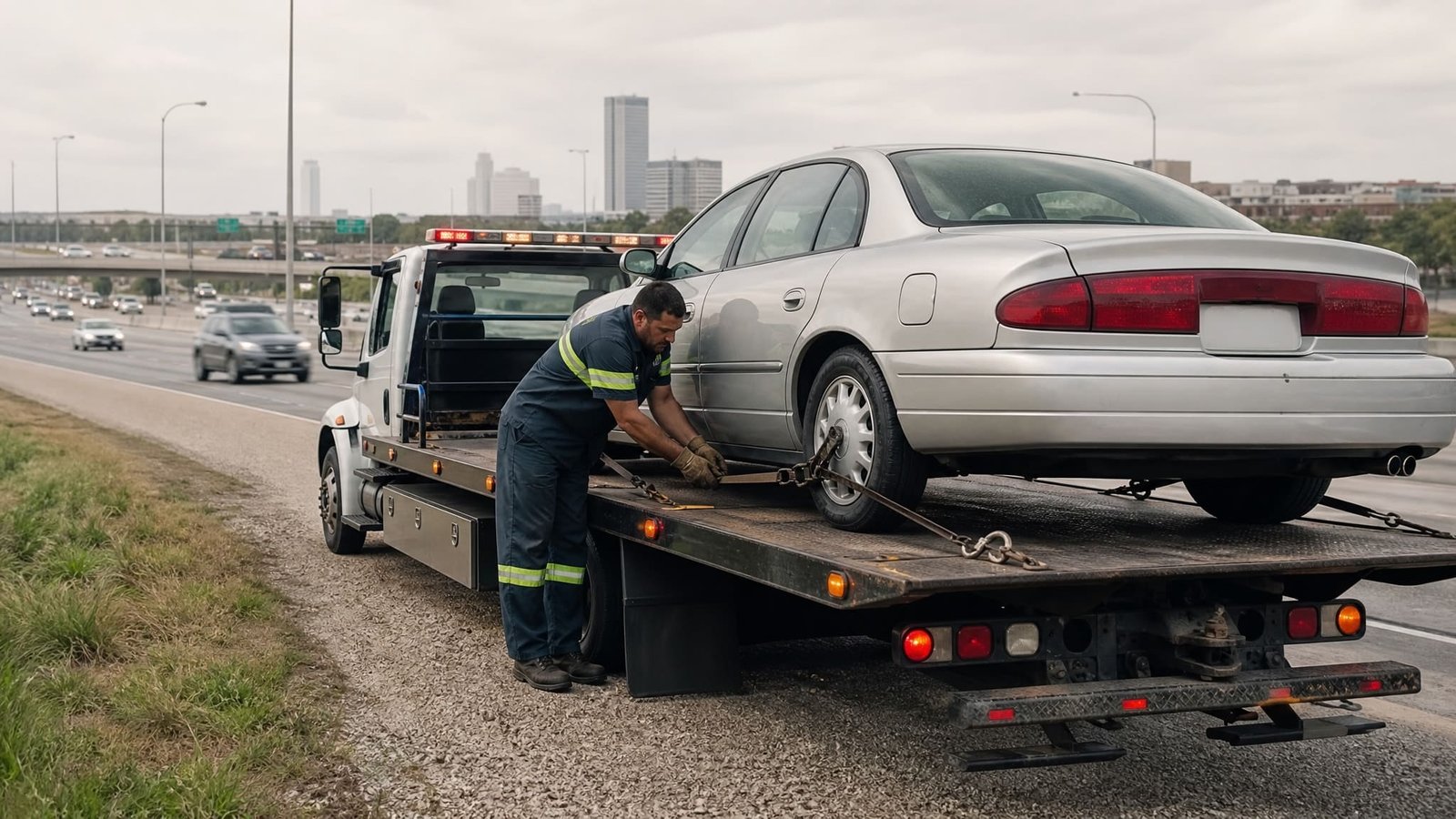
Ask specifically for a flatbed. Don’t settle for “wrecker” or “tow truck,” terms vague enough to mean anything from a wheel-lift rig to an old-school hook-and-chain setup. That distinction matters because modern unibody frames and low ground clearance make old lifting methods risky for everything from a sedan to an SUV. Flatbed towing in Tulsa means your whole car rests level on the bed during transport, no strain on the drivetrain, the suspension, or the bumper mounts.
Hook-and-chain towing is genuinely risky for modern cars. It lifts one axle and drags the other, putting torque on a frame that was never built to take a point load like that. A lot of newer cars, especially the growing number of EVs around Jenks and Bixby, have battery packs and sensors mounted low enough that a bad lift can cause damage running into the thousands. Some drivers will offer dollies or skates to work around this, but those just add more things that have to go right under roadside pressure. A real flatbed skips all of that: all four wheels off the pavement, full weight supported evenly across the chassis.
Some operators avoid flatbeds on simple jobs because loading takes a few extra minutes. That’s never worth risking structural damage to your car. Listen for hesitation when you ask for one specifically, because a driver trying to talk you into a wheel-lift instead is telling you something about their equipment. A pro understands that damage-free towing starts with matching the truck to the job, and they won’t try to talk you out of asking for it right. If they can’t guarantee a flatbed, thank them and call someone who can.
EVs need the flatbed rule followed even more strictly. Regenerative braking can generate dangerous current if the wheels turn while the motor’s disengaged. Tesla owners and other EV drivers around Broken Arrow and Glenpool are dealing with a real vulnerability here: towed wrong, an EV can fry a control module or quietly degrade battery health in ways you won’t notice until later. Ask about EV experience along with the equipment question, and you’ll find out fast whether a company has kept up or is still running on twenty-year-old assumptions. Tulsa Wrecker runs Tesla-capable equipment and trains for it, because our local roads have moved past internal combustion, and every EV tow gets handled with that in mind.
Asking about equipment tells you something bigger too: how the whole operation is run. A company that invests in a real flatbed fleet usually runs tight everywhere else, because they’re serving customers who expect it. A company running mismatched or aging trucks to save money is usually cutting corners somewhere else too, insurance, driver training, whether the truck shows up when they say it will. The flatbed question does double duty. It’s really a question about whether they do things right, even when doing it right costs more than the shortcut.
Confirming equipment is the start of the conversation, not the whole thing. Flatbed capability covers physical safety, but you still need straight answers on price, arrival time, and where the car’s actually going. Each answer builds on the last one, and skipping any of them leaves a gap something can go wrong in. You’re not interrogating the dispatcher. You’re making sure both of you understand the job before a truck rolls toward you.
A good towing company welcomes these questions, because they tell the driver you care about quality and not just speed. Ask informed questions and you’re signaling you’ll notice the work and expect them to stand behind it. That sets the tone for the whole job, from dispatch to delivery, and it usually gets you more careful service in return.