Nobody wants to think about breaking down on the Broken Arrow Expressway during rush hour. But knowing what to look for in a towing company before you need one changes everything when it happens. Stress and urgency mess with your decision-making faster than you’d think, and that usually means grabbing the first search result instead of the best option for your vehicle.
Saving a tow company’s number is a simple safety habit, about the same as checking your tire pressure. Most drivers still wait until they’re stranded to start vetting anybody. And on a fast corridor like the Turnpike, fumbling with your phone looking for help is how a breakdown turns into something worse.
Why Proactive Roadside Planning Beats Panic Searching
When your car dies in traffic, your brain shifts into survival mode. Logical evaluation takes a back seat to just wanting relief, and that makes you an easy target for operators who count on desperation to justify an inflated rate. You might agree to vague terms or sketchy equipment simply because you want off the shoulder of I-44 as fast as possible.
Five minutes of research today keeps that future panic from making the decision for you. Think of it as maintenance for your peace of mind, not just your car. A pre-vetted number in your phone means one calm call, instead of scrolling through search results while semis blow past you at seventy.
Vetting a Tow Truck Company for Damage-Free Service
Not all tow trucks are built the same, and trusting the wrong equipment with a modern vehicle can turn a minor breakdown into a real repair bill. Modern EVs and luxury vehicles often need specialized flatbed procedures so the tow doesn’t damage the battery or drivetrain, something a standard wheel-lift truck simply can’t accommodate. You need to confirm the company has both the right hardware and the training to use it correctly on your specific make and model.
Flatbed Equipment vs. Wheel-Lift Risks
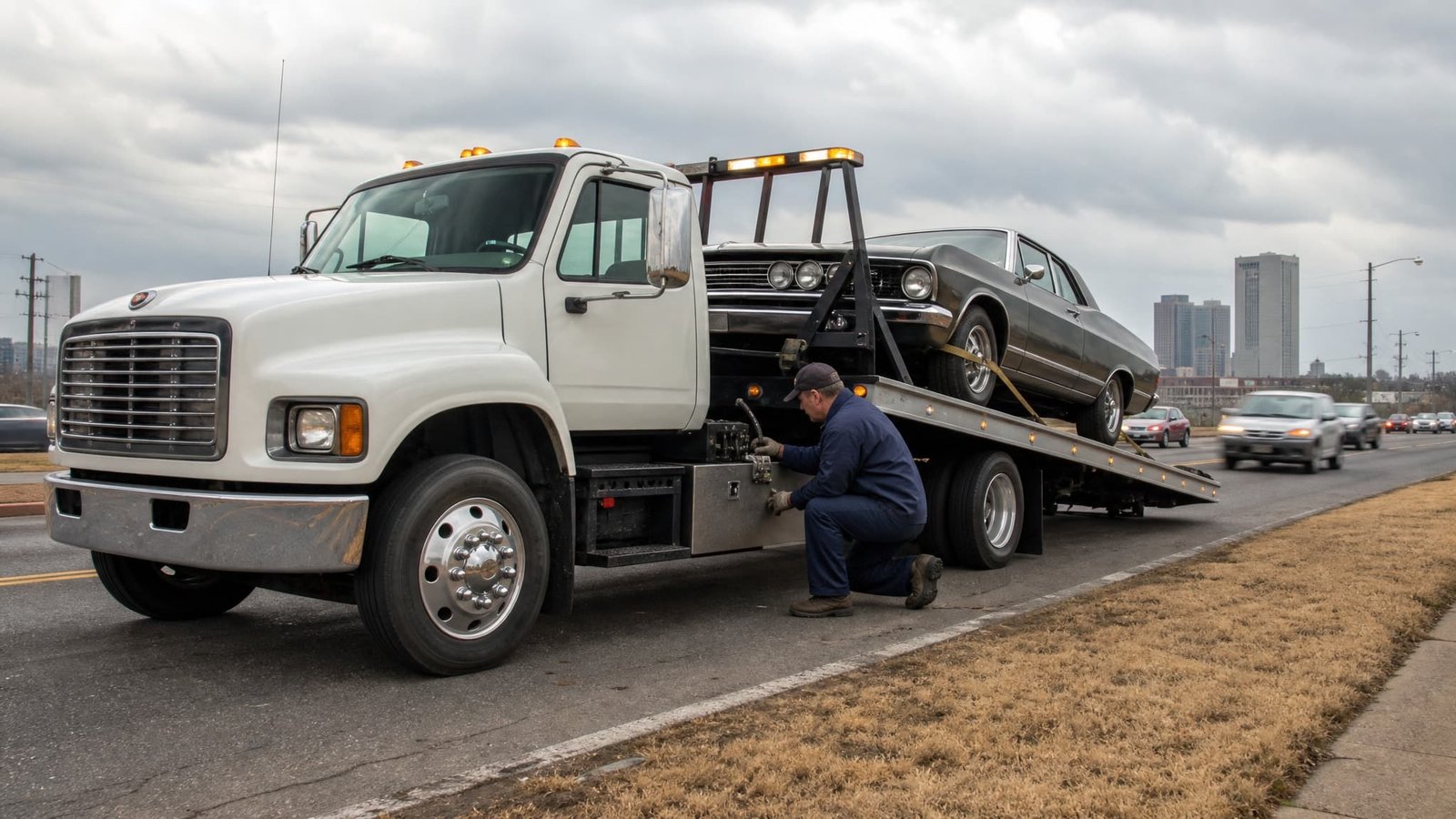
A trustworthy towing company leans on the flatbed as its main tool for preventing damage in transit. Wheel-lift trucks drag the non-driving wheels across the pavement. On an all-wheel-drive vehicle that risks the transmission, and on a low-clearance car it means bumper scrapes. Flatbeds keep all four tires off the ground, which is why they’re the only safe call for Teslas, AWD SUVs, and performance vehicles.
If a dispatcher hesitates to confirm a flatbed is available for your specific vehicle, hang up and call someone else. The extra minute spent checking equipment type saves thousands in potential drivetrain repairs down the road.
Specialized Training for Modern Vehicles
Having a flatbed is necessary, but it isn’t the whole story. The operator also has to know how to load complex vehicles without hurting them. EVs carry unique weight distribution and manufacturer-specific tie-down points that differ a lot from a regular gas car. Strap it wrong and you can crack a battery casing or damage suspension components, even with a perfectly good truck underneath.
Tulsa Wrecker has run as a local owner-operator service since 2019, specializing in damage-free flatbed towing across Tulsa and the surrounding towns. Our team follows safe EV towing protocols that respect manufacturer guidelines and protect your investment. For a deeper look at what proper handling looks like on high-end vehicles, our guide on choosing a towing company for luxury cars covers the technical details that separate careful operators from careless ones.
Towing Company Red Flags to Avoid in Tulsa
Spotting bad actors before you’re stranded means knowing which warning signs actually matter in our local market. Predatory towing outfits hide behind professional-sounding dispatchers and polished websites, so surface appearances won’t tell you much. A company that won’t answer basic questions over the phone will almost certainly surprise you with hidden fees once your car is hooked up and you’ve got no leverage left.
Vague Pricing and Hidden Fees
Honest operators give you a clear estimate, based on distance, vehicle type, and time of day, before they ever dispatch a truck. If a dispatcher quotes a suspiciously low hook-up fee but won’t talk mileage rates or after-hours surcharges, that’s a bait-and-switch waiting to happen. Ask specifically about total expected cost, including taxes and anything extra for winching or dolly use.
Push for a written or texted estimate before service starts. Legitimate companies welcome that question because transparency builds trust. Predatory ones deflect, or offer only a verbal promise that evaporates when the bill shows up. To see what transparent pricing actually looks like, you can get a real tow truck price quote from us anytime.
Lack of Local Physical Presence
National chains often route your call through an out-of-state center that has no idea what Tulsa traffic actually looks like. Those dispatchers promise arrival times based on straight-line distance, not the reality of Riverside Drive or the BA Expressway at rush hour. No verifiable local address usually means the company is just brokering your job to a subcontractor they don’t directly oversee.
Local presence means someone actually knows where you are and how long it really takes to reach you from Jenks, Bixby, or South Tulsa. It also means there’s a physical shop you can walk into if something goes wrong, and that’s the kind of accountability an anonymous broker can’t match.
The Value of Local Owner Operator Service
A locally owned outfit tends to deliver better outcomes than a national chain, because the owner’s reputation rides on every single job. Remi Carrillo founded Tulsa Wrecker on the idea that honest service and careful handling matter more than being the cheapest option during an emergency. When the person answering your call also owns the truck showing up, you get direct accountability instead of a corporate script.
Faster Response Times Across Metro Areas
Owner-operators get through Tulsa traffic faster than a chain running purely on GPS, because they drive these streets every day. We know which shortcuts hold up during construction season and which intersections lock up at shift change. That knowledge translates straight into shorter wait times when you’re stuck somewhere unsafe.
GPS tells a driver where you are. Local experience tells them how to actually get there. That difference matters when you’re parked on a narrow shoulder and the daylight’s fading.
Accountability and Community Reputation
A local owner-operator can’t afford to cut corners, because their name is on every single interaction in a fairly small community. A national franchise can absorb a bad review and rotate staff through; an independent operator lives or dies by word of mouth from neighbors and local mechanics. That lines their incentives up with yours in a way the corporate model just doesn’t.
You benefit from that every time you call, because the person helping you has skin in the game. Their living depends on your repeat business and your referrals, not just closing tonight’s ticket.
Your Towing Company Checklist for 2026
Vetting a tow truck company doesn’t take automotive expertise, just a few checks you can knock out in under ten minutes. Confirm the company carries current insurance and runs flatbed equipment suited to your vehicle type. Ask about pricing structure before you agree to service.
Save the number now, so you’re not making these calls under duress later. A trusted contact ready to go for Jenks, Bixby, or South Tulsa turns a potential crisis into a manageable inconvenience. For more on what separates top-tier operators from the rest, our overview of best roadside assistance company traits goes deeper.
This checklist points you toward reliable partners, but it doesn’t guarantee immunity from mechanical failure. Even the best-prepared driver runs into things beyond their control, and no amount of planning replaces paying attention in the moment.
Understanding Real Tow Truck Costs and Quotes
Legitimate towing costs follow a predictable base rate plus mileage, reflecting real operating expenses and fair pay for the driver. A low-ball hook-up fee gets you on the phone, and then the mandatory surcharges show up and triple the bill. Knowing the difference protects your wallet when you’re at your most vulnerable.
Ask about hook-up fees, mileage rates, after-hours premiums, and any winching charges before you authorize the dispatch. A reputable operator walks you through each one without hesitation. If the math looks too good to be true, it probably is, and the real number shows up at the worst possible moment.
Transparency isn’t a bonus feature. It’s the baseline. A company that can’t explain its own pricing doesn’t deserve your business.
When to Call for Professional Roadside Assistance
Knowing when to call for help matters as much as knowing who to call. A loose battery terminal, or a tire you can safely change in a parking lot, might not need a tow truck at all. But trying a roadside repair on a busy highway puts you in the path of passing traffic, and it distracts you from honestly judging whether the fix is even within your skill set.
If your vehicle is stuck on a highway shoulder, in an active lane, or somewhere with no safe pedestrian access, call for professional flatbed transport right away. DIY repairs in those spots risk injury, and even a small mistake can escalate fast. Part of planning ahead is being honest about your limits and knowing when it’s time to hand it off.
For those still working out their own criteria, our piece on picking a reliable tow truck company covers more ground on evaluating reliability. Save Tulsa Wrecker’s number, 539-292-3074, in your phone today as your pre-vetted, damage-free towing partner for whatever tomorrow brings.