If you’ve ever driven past a tow truck on the shoulder of I-44 and wondered whether you’re legally required to move over, the answer is yes. Oklahoma’s Move Over Law isn’t a suggestion, and it’s not just for police cruisers. It covers every tow operator, roadside technician, and emergency worker standing between your lane and a disabled vehicle. I run Tulsa Wrecker and work these roads daily. Whether drivers follow this law is the difference between a routine tow job and a tragedy.
Here’s what every Tulsa driver needs to know.
What the Move Over Law Actually Requires
Move Over Law Oklahoma Requirements: The Basics
Oklahoma’s Move Over Law requires drivers to act whenever they approach a stationary vehicle displaying flashing, rotating, or oscillating lights on a roadway or shoulder. The rule is straightforward: if you can safely move one lane away from the stopped vehicle, you must. If a lane change isn’t safe or possible, say, traffic is heavy or you’re on a two-lane road, you must slow to a speed that’s safe and reasonable for the conditions.
That’s it. Spot the lights, check your mirrors, move over or slow down. The law doesn’t ask for anything complicated. It just asks you to pay attention and give workers room to do their jobs.
For the full legal breakdown, see the Move Over Law Oklahoma requirements and penalties page.
Which Vehicles Are Covered Under Oklahoma Law
This is where a lot of drivers are surprised. Oklahoma’s Move Over Law expanded over time to include far more than police and fire vehicles. Today, the law covers:
- Police, sheriff, and highway patrol vehicles
- Fire trucks and EMS/ambulance units
- Tow trucks and recovery vehicles
- Roadside assistance vehicles
- Department of Transportation and utility vehicles with active warning lights
Tow trucks are explicitly included. That expansion happened because of documented danger, roadside strikes involving tow operators and service workers are a persistent and largely preventable cause of on-the-job fatalities across the country. Oklahoma legislators recognized that and strengthened the law accordingly.
Move Over Law Penalties in Oklahoma
Failing to comply carries real consequences. A violation is a moving offense, which means it goes on your driving record, not just your wallet. The fines aren’t trivial, and they increase with the severity of the situation.
If a driver’s failure to move over results in injury to a worker or damage to emergency equipment, the charges escalate significantly. What starts as a traffic citation can turn into a serious criminal matter if someone gets hurt. Oklahoma Highway Patrol and local agencies have consistently listed Move Over Law enforcement as a priority, particularly during nighttime hours and in active construction zones where visibility is already compromised.
The cost of not moving over, financially and legally, is far higher than the two seconds it takes to change lanes.
Why Tow Truck Scenes Are Especially Dangerous
What Tow Truck Drivers Face on the Roadside
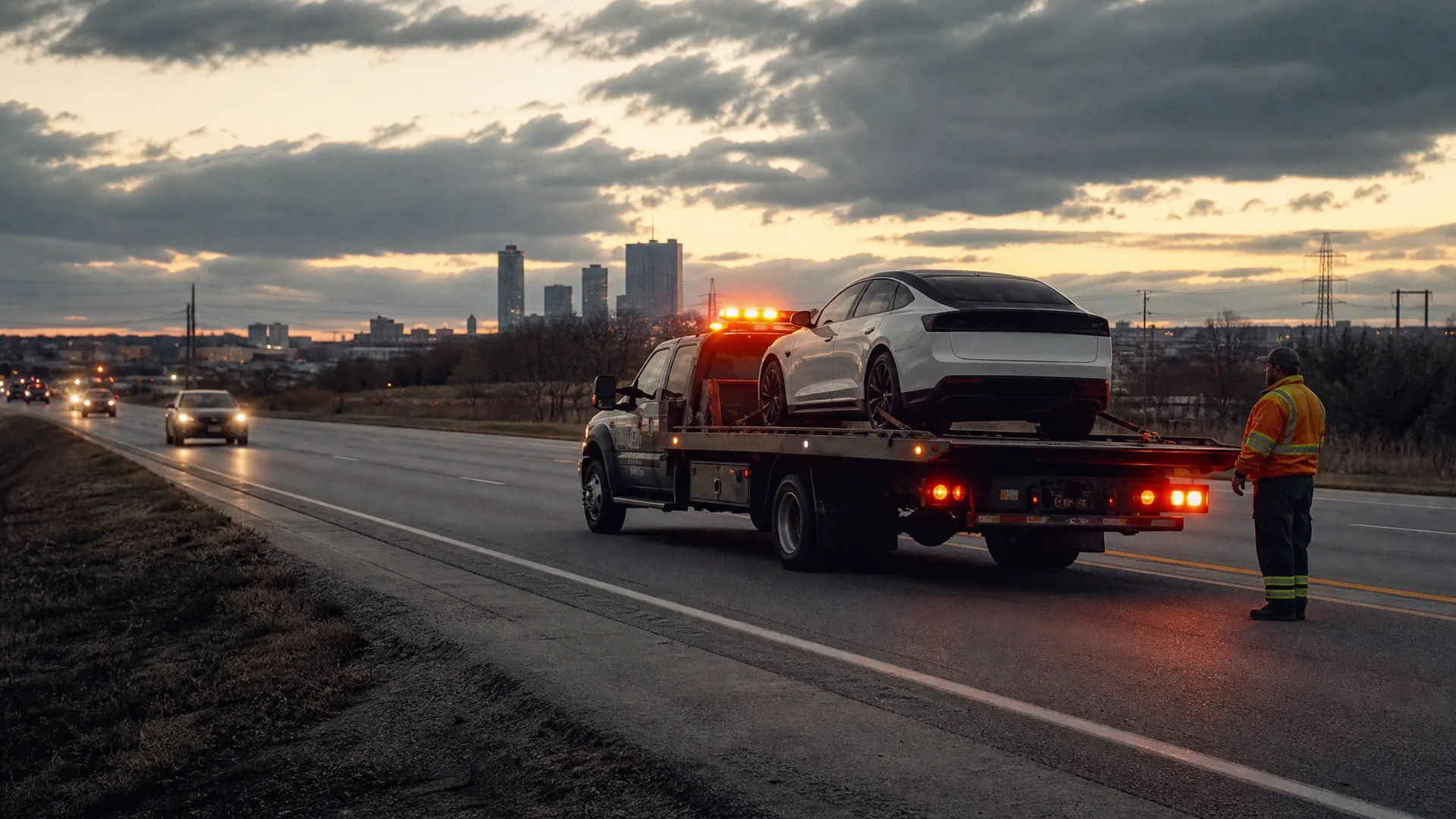
Let me paint you a picture from the shoulder of a busy Tulsa highway. It’s 11 p.m. A driver has spun out near the US-169 and Admiral interchange. I pull up behind them, lights flashing, and start hooking up the vehicle. There’s maybe four feet between me and the nearest travel lane. Cars are passing at 65 to 70 mph. Some move over. Some don’t even tap the brakes.
That’s the reality of tow truck scene safety every single night.
Tow truck operators and roadside workers are among the most exposed workers on American roads. We’re out there in the dark, in the rain, sometimes in the middle of active traffic, operating heavy equipment and moving around a disabled vehicle. There’s no guardrail between us and a driver who’s distracted or just not paying attention.
Remi Carrillo and the Tulsa Wrecker crew work Tulsa’s busiest highways, I-44, US-169, and the Creek Turnpike, where fast-moving traffic passes within feet of an active tow scene. That firsthand exposure shapes every safety tip in this article.
High-Risk Stretches Around Tulsa
Certain corridors around Tulsa are especially unforgiving for roadside work:
- I-44 between downtown and the west side, high speed, heavy truck traffic, and limited shoulder space
- US-169 through north and east Tulsa, fast interchanges with poor sight lines in several spots
- Creek Turnpike (SH-364), commuter speeds, limited lighting, and wide lanes that give drivers a false sense of security
- Highway 75 south toward Jenks and Bixby, construction zones have made this corridor increasingly hazardous
On a busy stretch of US-169, a tow driver hitching up a disabled vehicle has almost no barrier between them and 70-mph traffic. If a driver in the nearest lane doesn’t move over or slow down, the margin for error is essentially zero.
What to Do Around Tow Trucks and Emergency Vehicles
Step-by-Step: Approaching a Tow Truck Scene Safely
When you spot flashing lights ahead on a Tulsa road, here’s exactly what to do:
- Spot the lights early. As soon as you see amber, red, or blue flashing lights, start assessing the situation. Don’t wait until you’re right on top of it.
- Check your mirrors. Look left and behind before committing to a lane change.
- Signal your move. Give other drivers a clear signal, don’t cut across lanes without warning.
- Change lanes smoothly. Move one full lane away from the stopped vehicle if traffic allows.
- If you can’t change lanes, slow down. Reduce your speed to something genuinely safe for the conditions, not just a slight tap of the brakes.
- Stay alert for workers in the roadway. Tow operators, firefighters, and technicians sometimes have to step into the travel lane. Expect it.
- Don’t rubberneck. Eyes forward, hands on the wheel. Distraction at a tow scene is its own hazard.
Roadside Assistance Safety Tips for Broken-Down Drivers
If you’re the one waiting for a tow, your behavior matters too. Here’s how to stay safe:
- Stay in your vehicle if it’s safe to do so. A car, even a disabled one, offers more protection than standing on the shoulder.
- Turn on your hazard lights immediately. This is the first thing you do, before anything else.
- Pull as far off the road as possible. If you can reach a parking lot, exit ramp, or wide shoulder, do it.
- Get behind a guardrail if you must exit the vehicle. Never stand between your car and oncoming traffic.
- Call for help, then stay put. Know when to call a tow truck instead of waiting roadside, sometimes staying in a dangerous spot to “assess the situation” makes things worse.
- Stay visible. If you have reflective triangles or road flares, use them. If not, your hazards do the job.
For a detailed breakdown of what to do in this exact situation, read our guide on what to do if your car breaks down on a Tulsa highway.
Move Over Law Tulsa: Local Enforcement and Real Road Conditions
The Move Over Law is actively enforced in Tulsa. Tulsa Police, the Tulsa County Sheriff’s Office, and Oklahoma Highway Patrol all treat violations seriously, and the combination of highway interchanges, ongoing construction zones, and high-traffic corridors makes compliance a real-world requirement, not a suggestion.
Broken Arrow, Jenks, Bixby, Glenpool, the surrounding communities Tulsa Wrecker serves regularly, have their own mix of rural highways and suburban arterials where tow scenes happen fast and without much warning. The Move Over Law applies on all of them.
When a tow scene pops up on the Creek Turnpike at rush hour or on I-44 late at night, every driver’s response in those first few seconds matters. Our crews rely on other drivers following this law to come home safe.
If you’ve been in an accident and need to understand what happens next, our guide on steps to take after a car accident before the tow truck arrives walks you through it, including car accident towing in Tulsa and what to expect from the process.
When You’re the One Who Needs a Tow
Breakdowns don’t schedule themselves. They happen on the worst stretches of road at the worst times, the middle of the I-44 / US-64 interchange at 2 a.m. or south 169 during a rainstorm with zero shoulder space. When it happens to you, the most important thing is knowing help is on the way and knowing how to stay safe until it arrives.
Tulsa Wrecker responds fast because we’re local. We know these roads, we know the interchanges, and we know how to reach you quickly whether you’re in midtown Tulsa, out in Broken Arrow, or stuck near the Creek Turnpike in Glenpool.
When we pull up behind your vehicle with our amber lights running, we’re counting on the drivers behind us to do the right thing, move over, slow down, give us room. That’s how this works. You follow the Move Over Law when you pass us. We do our job safely. You’re back on the road with minimum drama.
If you need local roadside assistance in Tulsa or a fast tow, call Tulsa Wrecker at 539-292-3074. We run 24-hour towing service in Tulsa and cover the full metro area. A real local operator will pick up, not a call center, not a dispatch hub three states away.
Stay safe out there. Move over for the people trying to help.