Remi Carrillo has hooked up more cars on the shoulder of Tulsa highways than he can count. He owns Tulsa Wrecker, powered by Neptune Towing, and he’s run flatbed calls across the Broken Arrow Expressway, Highway 75, and the Creek Turnpike since 2019. Ask him about the slow down move over law in Tulsa, and he won’t start with the statute. He’ll tell you a story instead.
What It’s Really Like Working the Shoulder When Cars Won’t Slow Down for a Wrecker
Most drivers pass a tow truck without a second thought. For the operator standing between two vehicles, hooking up straps in the dark, that same pass can feel like standing next to a moving wall.
The wind blast alone can knock you off balance. Add headlights, a narrow shoulder, and a driver checking their phone instead of the lane ahead. The job gets a lot scarier than it looks from a passing car.
A near-miss on Highway 75 that stuck with Remi and the crew
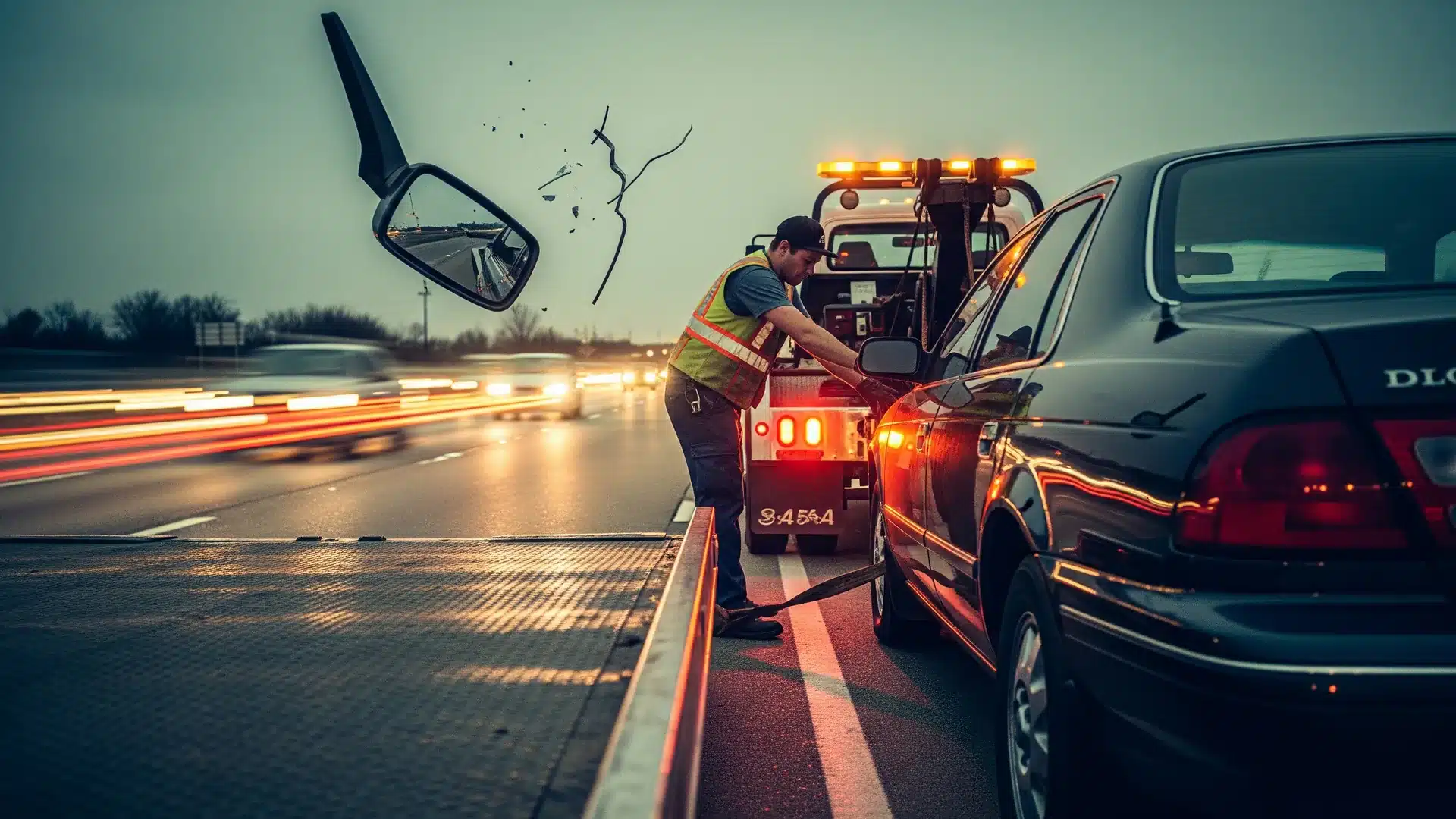
One night near the Highway 75 and I-44 interchange, Remi was mid-hookup on a stalled sedan. A car came through the lane closest to the shoulder without easing off the gas. It clipped the tow truck’s side mirror at highway speed.
Nobody got hurt that night. But the mirror shattered, and Remi still remembers the sound before he remembers seeing the car. He talks about it not to scare people. He talks about it because it’s the clearest example he has of why the slow down move over law in Tulsa exists in the first place.
That kind of moment doesn’t show up in a legal summary. It shows up in muscle memory, in the way Remi’s crew now checks mirrors twice and keeps one eye on traffic the whole time they’re working. It’s part of how a tow truck hookup actually works on a live shoulder. It’s why the crew treats every call like the traffic beside them could shift in a second.
Why Tow Truck Operators Are Some of the Most At-Risk Roadside Workers in Tulsa
Tow truck and roadside repair workers rank among the most at-risk roadside professions in the country. Struck-by incidents on shoulders are a leading cause of injury and death in the industry. That’s not because operators are careless. It’s because the job puts a person on foot, inches from traffic moving 60 miles an hour or more.
The shoulder is not a safe zone, even with lights flashing
Flashing lights help. They don’t guarantee anything. On the Broken Arrow Expressway, shoulders narrow near overpasses and exits, leaving almost no buffer between the truck and the nearest lane.
Blind curves make it worse. A driver rounding a bend on Highway 75 might not see a wrecker until they’re already on top of it. Add a phone glance, a coffee cup, a quick check of the radio, and reaction time disappears fast.
That’s the real reason roadside worker safety in Tulsa matters so much to crews like Neptune Towing. It’s not paperwork. It’s the gap between a routine call and a call that goes wrong.
How the Slow Down Move Over Law in Oklahoma Actually Covers Tow Trucks and Wreckers
A lot of drivers assume the move over law only applies to police cars and ambulances. It doesn’t stop there. Oklahoma’s Slow Down Move Over law requires drivers to move over a lane or slow down for any stopped vehicle running flashing lights. That includes tow trucks and wreckers, not just emergency vehicles.
If you want the full statute breakdown, penalties, and legal specifics, that’s already covered in the legal requirements of Oklahoma’s Slow Down Move Over law. This piece is about what that law looks like from the shoulder, not the courtroom.
For readers outside the metro wondering how the rule applies elsewhere, move over law requirements across Oklahoma follow the same basic structure statewide.
Passing a Tow Truck Safely in Tulsa: Practical Driver Behavior Tips
Forget the legal language for a second. Here’s what actually keeps a tow operator safe when you pass them on the highway.
Ease off the gas well before you reach the truck. Don’t wait until you’re right on top of it to react. Watch for movement between the vehicles. That’s a person, not an obstacle.
Check your mirrors before you merge back into the original lane. A lot of near-misses happen not on the pass, but when a driver cuts back too soon and clips the operator’s work zone.
What to do when you can’t fully move over in heavy traffic
Sometimes traffic won’t let you change lanes. If you can’t move over safely, slow down significantly instead. The law allows for that when a lane change isn’t possible, and the operator on the shoulder needs the extra room a slower pass gives them.
Habits that keep both drivers and tow operators safe
Treat any vehicle with flashing lights on the shoulder the same way you’d treat a police car. It doesn’t matter if it’s a wrecker, a roadside assistance van, or a stalled car with hazards on. Slow down and give it space.
Build the habit now, not in the moment. Drivers who already scan shoulders for flashing lights react faster and safer when it actually counts.
What to Do When You See a Tow Truck or Roadside Assistance Vehicle on the Shoulder
When you spot a wrecker ahead, here’s the short version. Slow down as soon as you see the lights, not right before you pass. Signal early so drivers around you know what you’re doing. Move one lane over if you can do it safely.
Don’t rubberneck. Watching the scene instead of the road ahead is how rear-end crashes happen right next to the truck you’re trying to avoid hitting.
This applies whether it’s a Neptune Towing crew or any other wrecker working the shoulder across Jenks, Bixby, Broken Arrow, or Glenpool. Every operator out there is somebody’s coworker, spouse, or parent trying to get home at the end of the shift. For a broader look at habits that apply across the metro, our full highway safety guide for Tulsa drivers covers more ground.
If you’re driving through areas where crews work often, like roadside assistance crews working the Broken Arrow Expressway or roadside help in South Tulsa, the same rule applies every time. Slow down, give room, move on safely.
Real Near-Miss Stories From the Neptune Towing Crew
Remi isn’t the only one on the crew with a story like the one on Highway 75. One driver hooking up a car near a Creek Turnpike on-ramp had a pickup truck swerve back into the lane just feet from where he was standing. He felt the draft off the tailgate.
Another night, a crew member working a call on the Broken Arrow Expressway watched a car drift toward the shoulder while the driver reached for something in the back seat. No contact that time. But it came close enough that the operator stopped working for a second and just watched the taillights, heart pounding.
None of these stories end in tragedy. That’s the point. Every one of them was a close call that could have gone differently with just a little more space and a little less speed. The crew doesn’t share them for sympathy. They share them because every driver who hears one might be the driver who slows down next time.
That’s really what the slow down move over law in Tulsa comes down to. It’s not a rule made up to slow your commute. It’s a small habit that keeps a real person on the shoulder safe while they’re doing their job.
Next time you see flashing lights ahead, whether it’s a wrecker, a roadside assistance van, or a stalled car, ease up, give room, and pass with care. And if you’re the one who needs a truck on the shoulder, call a trusted Tulsa tow truck crew at 539-292-3074. Neptune Towing has run damage-free calls across Tulsa since 2019, and the crew knows exactly what it feels like to wait on that shoulder for traffic to slow down.