Every year, roadside workers across Oklahoma are struck by passing vehicles, not because drivers are reckless, but because they didn’t know what to do in the moment. The Move Over Law Oklahoma puts that knowledge in every driver’s hands. If you drive in Tulsa or anywhere in the state, this law applies to you, every single time you see flashing lights on the shoulder.
What Is the Move Over Law in Oklahoma?
Oklahoma’s Move Over Law requires drivers to take action when approaching a stationary vehicle with flashing, rotating, or oscillating lights on the side of the road. That action is straightforward: move over a lane away from the stopped vehicle, or slow down significantly if moving over isn’t possible.
The law isn’t just about protecting police officers, though that matters. It covers anyone working a roadside scene in an official capacity.
Which Vehicles Are Covered Under Oklahoma’s Move Over Law
Oklahoma’s law has been expanded over the years to cover a wide range of vehicles:
- Law enforcement, state troopers, city police, sheriff’s deputies
- Fire and rescue vehicles
- Emergency medical services (EMS)
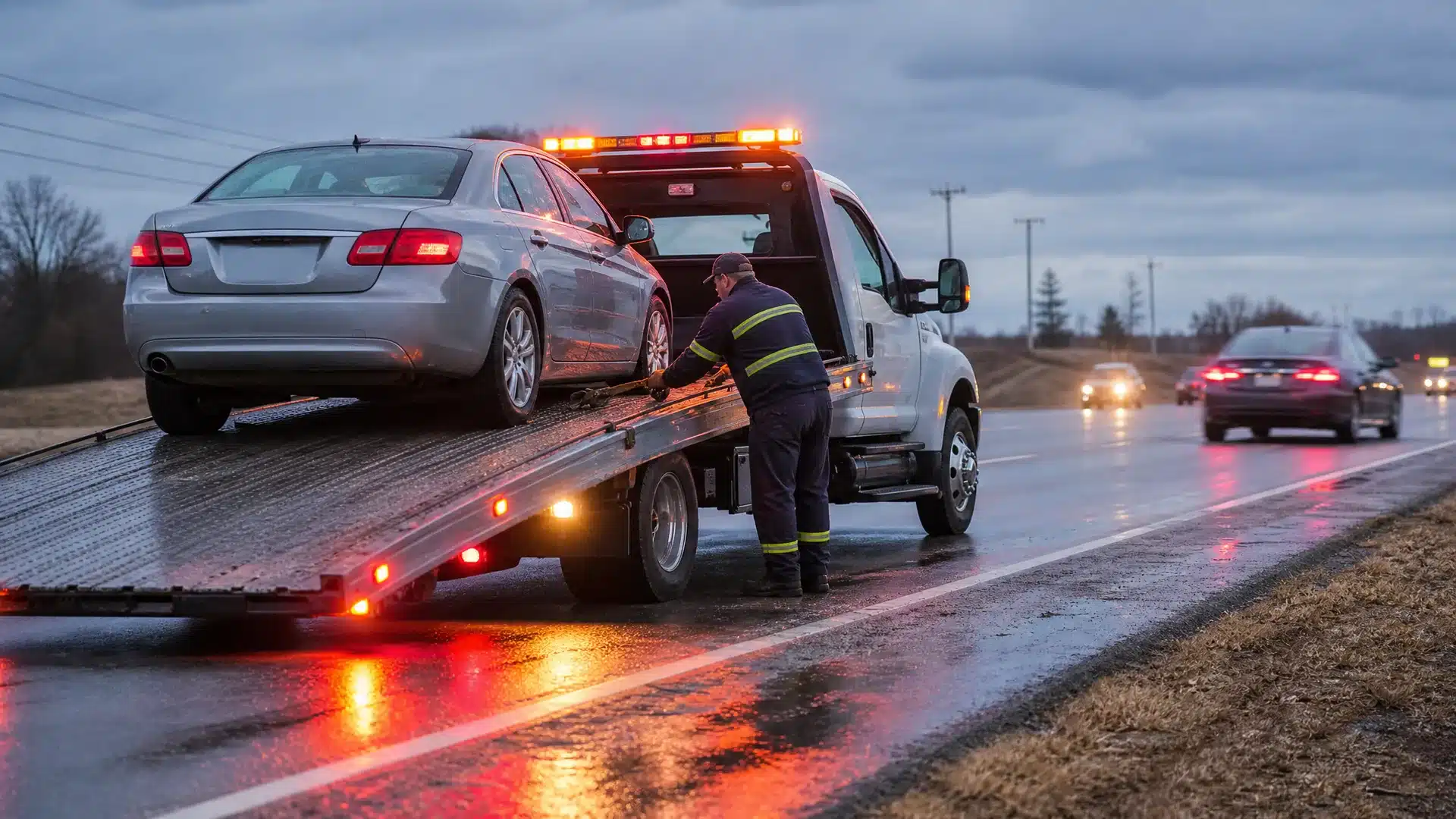
- Tow trucks with flashing or amber warning lights
- Road crew and utility vehicles, including ODOT maintenance trucks and utility company crews
That last category matters. Oklahoma extended these protections to tow truck operators and highway workers because they face the same exposure to live traffic as first responders, often for longer stretches of time. The law is codified under Oklahoma Statutes Title 47, which governs motor vehicle law across the state.
How the Move Over Law Works on Oklahoma Roads
The rule is simple in theory. On a busy highway, it takes a little more awareness. Here’s the basic sequence:
- Check your mirrors early, spot the flashing lights before you’re right on top of them.
- Signal your intent, a lane change should be deliberate, not a last-second swerve.
- Move over one full lane, not just toward the shoulder, but fully into the adjacent lane.
- If you can’t move over, reduce speed, slow down to a safe margin below the posted speed limit as you pass.
What to Do When You Can’t Move Over
On a busy multi-lane highway like I-44 during rush hour, moving over is usually possible if you check traffic and time it right. But sometimes it isn’t, heavy traffic, a concrete barrier, or a narrow roadway can make a lane change unsafe.
In that case, Oklahoma law allows you to slow to a safe reduced speed instead. Exactly how slow is a judgment call, but the standard is clear: slow enough that the roadside worker has a meaningful buffer if something goes wrong. Don’t just lift your foot off the gas, actually reduce your speed.
Move Over Law on Highways vs. City Streets
Most drivers think of the Move Over Law as a highway rule. It applies on multi-lane highways like US-75, I-44, and Highway 169, but it doesn’t stop there. On a two-lane road like parts of Highway 51 east of Tulsa, there’s no adjacent lane to move into, so slowing to a reduced speed is the required response. The law applies on any Oklahoma roadway where a covered vehicle is displaying warning lights on the shoulder or roadway edge.
City streets in Tulsa, South Memorial Drive, Admiral Place, 21st Street, fall under the same expectation. If a tow truck is lit up and working a breakdown in a turn lane on 41st Street, slow down as you pass.
Penalties for Violating Oklahoma’s Move Over Law
Violating the Move Over Law in Oklahoma is a moving violation. It carries a fine and adds points to your driving record. Those points can affect your insurance rates, and accumulating enough of them puts your license at risk.
When a violation causes injury to a roadside worker or law enforcement officer, the consequences scale up significantly, into criminal territory. That’s not a minor ticket situation.
But honestly, the real cost of failing to move over isn’t measured in dollars or points. It’s measured in the workers who don’t make it home. That’s the version of this law that matters most, and it’s worth keeping in mind every time you see amber lights flashing on a Tulsa shoulder.
Why Tow Truck Drivers Depend on Drivers Like You
As a local Tulsa tow truck driver, this isn’t abstract. Our operators work active traffic scenes on I-244, the BA Expressway, and the Creek Turnpike regularly, and the exposure to live traffic is real every single time.
Picture a flatbed responding to a breakdown on US-75 near downtown Tulsa. The driver has to position the truck parallel to traffic, activate all warning lights, and then step out to hook up the disabled vehicle. That process takes time. The operator is working inches from cars passing at 60 miles per hour. Every driver who doesn’t slow down or move over is a direct hazard.
Towing and roadside professionals consistently identify moving traffic, not the vehicles being towed, as the primary danger in their work. The truck itself isn’t the threat. The cars driving past at highway speed are.
We’ve been doing this since 2019 across Tulsa and the surrounding area. The jobs on the BA Expressway at night, the recoveries on the Creek Turnpike in the rain, the one thing that makes every one of those jobs more dangerous is a driver who doesn’t move over. And the one thing that makes it safer is a driver who does.
If you’ve ever wondered whether towing after a car accident in Tulsa puts our crew at risk, yes, it does. Accident scenes are exactly where the Move Over Law matters most, because there’s usually debris, disoriented drivers nearby, and a tow operator working in the middle of it.
How to Stay Safe When You’re the One Broken Down
Now flip the script. Your car just died on Highway 169, or you’ve got a blowout coming off the BA Expressway. What do you do?
Knowing what to do when your car breaks down on a highway in Tulsa can keep you safe until help arrives. The basics apply anywhere in Oklahoma.
Roadside Safety Tips Until Help Arrives
Pull as far off the road as possible. Get every inch of your vehicle onto the shoulder, or beyond it if there’s a safe area like a parking lot or wide grass median nearby.
Turn on your hazard lights immediately. Don’t wait until you’ve stopped. Hazards on while you’re still rolling give other drivers time to react.
Stay behind the guardrail if one is available. The guardrail is between you and traffic. Use it. Don’t stand next to your car on the traffic side.
Call for help, then stay in your vehicle if there’s no safe place to stand outside. A vehicle, even a disabled one, offers more protection than standing in the open.
Don’t try to change a tire in a live lane or on a narrow highway shoulder. Wait for professional help. The tire can be replaced. You can’t.
For reliable roadside assistance in Tulsa and the surrounding areas, from a jump start to a flatbed tow, Tulsa Wrecker responds fast and treats your vehicle with care.
If you’ve slid off the road, don’t try to drive out. Getting a car safely recovered from a ditch requires the right equipment and technique, forcing it makes the damage worse.
Move Over, Stay Safe, It’s the Law and the Right Thing to Do
The Move Over Law Oklahoma exists because roadside workers, tow truck operators, first responders, utility crews, deserve to go home at the end of their shift. Moving over or slowing down costs you a few seconds. Failing to do it can cost someone everything.
If you ever need help on a Tulsa road, the team at Tulsa Wrecker, powered by Neptune Towing, is local, experienced, and ready. We know these roads because we work them every day. Call us at 539-292-3074 or visit our emergency towing service in Tulsa page. We’ll get to you fast and handle your vehicle the right way.