If you’re comparing a tow truck quote in South Tulsa against one in Broken Arrow, here’s the short answer. The city name rarely sets the price. Miles, truck type, and what the job demands do.
I’ve taken calls from both sides of that line since 2019, and the same question keeps coming up from drivers near the border: does it matter which side I’m on? Mostly, no. What matters is where your car is sitting, where it needs to go, and whether it needs a flatbed.
This isn’t a price list. A real quote depends on your pickup spot and destination, so you won’t find a single number here that fits every call. What you will find is how the pieces add up, so you can read any quote, ours or anyone else’s, and know what you’re looking at.
What Goes Into a Towing Quote in Tulsa
Most towing quotes are built from the same few parts. The labels change from company to company, but the logic doesn’t, and once you see it a quote stops feeling like a mystery.
The Hookup Charge and the Loaded Miles
The first part is the hookup, sometimes called the base charge. That covers getting the truck set up, securing your car, and getting it rolling, and it’s the same whether you’re moving it two miles or twenty.
The second part is the per-mile charge for the loaded tow. “Loaded” means miles with your car on the truck, from pickup to drop-off. A short hop from a shopping center lot to a shop down the street and a haul from the far end of town to a dealership are very different jobs, even though both start with the same hookup.
Distance is the part that drivers underestimate, and how distance shapes what a tow costs in Tulsa is worth a read if you want the longer explanation.
Extras That Move the Total: Winching, Recovery, and Night Calls
The third part is labor beyond a simple load-up. If your car is off the pavement, nosed into a ditch, or wedged somewhere a truck can’t just back up to, somebody has to winch it out first. Accident recovery works the same way: more time, more equipment, more hands.
Night and weekend calls can also carry their own rates at some companies, which is why you should ask about them up front instead of finding out on the invoice.
A plain curbside pickup with a car that rolls and steers has none of those extras. You pay for the hookup and the miles. That’s the clean version, and plenty of calls are exactly that.
South Tulsa vs Broken Arrow: Where a Towing Quote Really Changes
South Tulsa is an area of the city of Tulsa. Broken Arrow is its own city next door. On a map that looks like a big divide, but on a tow ticket it usually isn’t, because the truck doesn’t care about the city line and the odometer does.
Pickup Miles Decide More Than the City Name
Say your car dies on the Broken Arrow Expressway and you’re not sure whether you’re in Tulsa or Broken Arrow. That’s more common than you’d think. The dispatcher’s first questions aren’t about the city. They’re about the exact spot and where you want the car to go, because those two answers set the loaded miles.
Two drivers can break down a few blocks apart, one on each side of the line, and get nearly the same quote if they’re headed to the same shop. Two drivers in the same city can get very different quotes if one is going across the street and the other is going across town.
Corridors matter more than boundaries. The Broken Arrow Expressway and Memorial Drive both carry you a long way quickly, so a destination on the other side of either one adds real loaded miles. Pull up a map before you call and see how far your drop-off actually is.
A quote that changes because of the city name alone should make you ask why.
Towing Zones vs Per-Mile Pricing in Tulsa
Some towing companies price by zone: a flat figure for anything inside a defined area. Others price by the mile. Both are legitimate, and neither is automatically the better deal.
Zones are simple, but they can overcharge short trips and undercharge long ones. Per-mile pricing tracks your actual trip more closely, but the total is only as clear as the company’s explanation of where the miles start.
So ask which model the company uses before you compare. If one quote is a zone price and the other is per-mile, putting the two side by side tells you very little. That’s the whole reason to ask, whichever side of the line you’re calling from.
Dispatch Distance and How Long You Wait
Where the nearest truck starts affects two things: how long you wait and whether the drive out to your car shows up on the bill. Those are separate questions, and a good dispatcher will answer both.
If you want the speed side of this, the response-time comparison for these two sides covers it, so I’ll stay on the money here.
Where the Nearest Truck Starts
A truck that’s close to you gets there sooner. That part is obvious. What’s less obvious is that some companies bill the drive to your car and some don’t, and that choice can change the total as much as the loaded miles do.
So a closer truck isn’t always the lower total. A company with a truck parked around the corner that bills the drive can still land above one whose truck is a bit farther out but doesn’t charge for it. You can’t know without asking.
Don’t assume a short wait means a bigger bill, either. Plenty of the time the nearest truck is also the best-priced one. The point is to ask, not to guess in either direction.
Flatbed Towing Rates Compared With Hook Tows
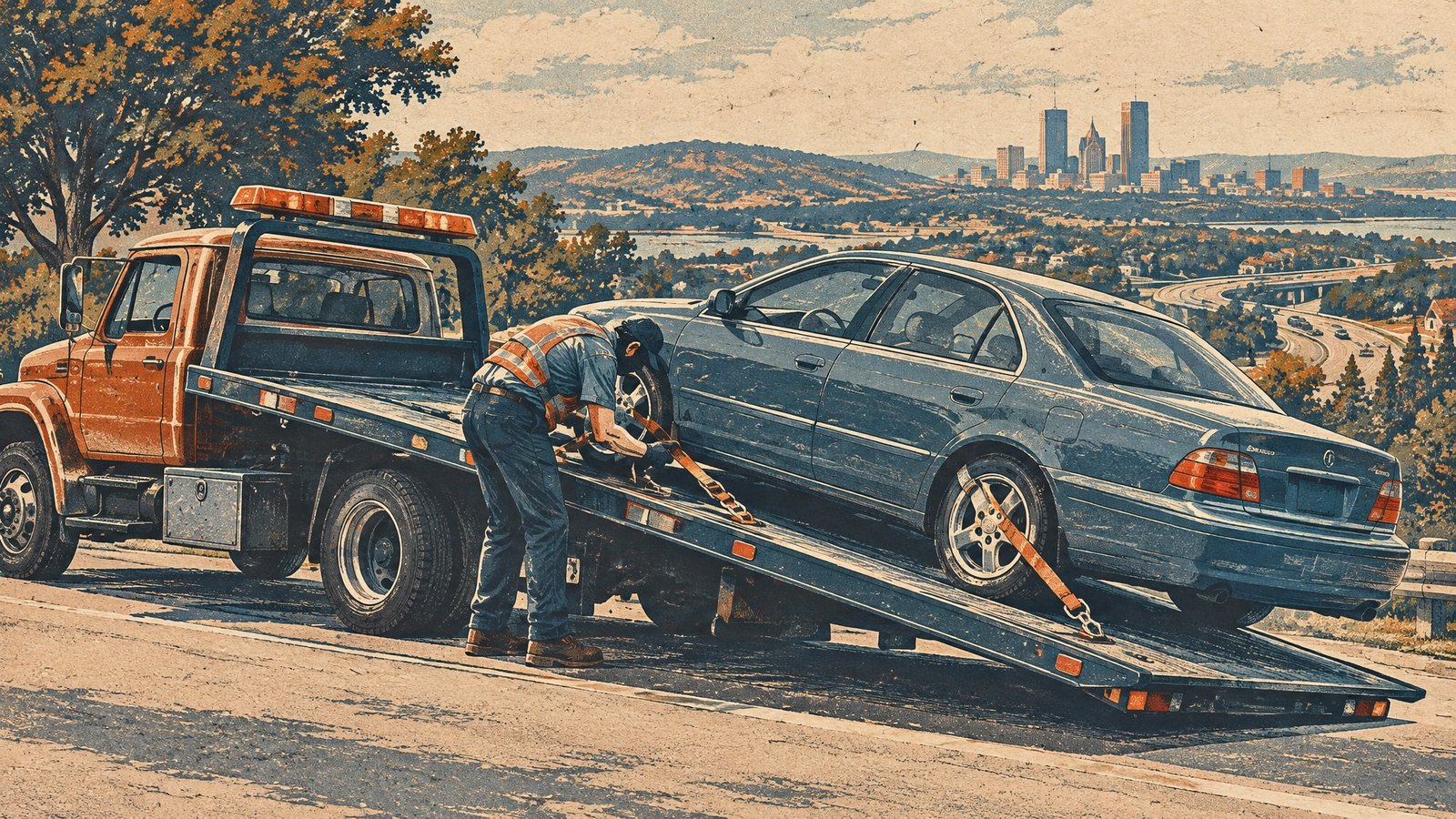
Flatbeds usually price above hook tows. The reason is plain: a flatbed carries the whole car on its bed, with all four wheels off the ground, while a hook tow lifts one end and drags the other. The flatbed is a bigger, costlier truck, and loading a car properly takes more care and time.
If you’re not sure which your car needs, flatbed or hook, and what your car needs lays out the checklist so I don’t have to repeat it here.
When the Flatbed Premium Is Worth Paying
Flatbed towing is what we do best, and I’ll tell you honestly where the extra cost earns its keep.
- AWD cars, because dragging two wheels while the other two turn is hard on the drivetrain.
- Lifted trucks and SUVs, where a hook can sit at a bad angle.
- Low-clearance cars, where a front bumper or splitter can scrape on the way up.
- Many EV cars, which we’ll get to next.
For those, the premium is cheap insurance against a repair bill. A rear-wheel-drive sedan with a plain bumper might do fine on a hook tow, and in that case you shouldn’t feel pushed toward a flatbed.
That’s the other half of the honest answer: a flatbed isn’t necessary for every car, and a company that insists otherwise on every call isn’t giving you the full picture.
Tesla and EV Tows: What Changes the Quote
Many EV and Tesla tows go on a flatbed, so vehicle type moves the quote more than the side of the line does. A Tesla in South Tulsa and a Tesla in Broken Arrow are both flatbed jobs, and both get priced from that starting point plus the miles.
Tulsa Wrecker is set up for Tesla and other EV tows, and that’s something I’d rather you ask any company about before the truck arrives. You’ll find the vehicle-specific detail in Tesla towing costs in Tulsa.
I’m not going to give you model-by-model rules here. Tell the dispatcher exactly what you drive and they’ll tell you how they’ll handle it.
Getting a Quote You Can Compare Side by Side
Two quotes can look nearly identical and still not be comparable. One might include the drive to your car, the other might not. One might be flatbed, the other a hook. Until they cover the same things, you’re comparing apples to a very different fruit.
If you’re calling more than one company, you can use this to put every quote on equal footing.
Questions That Put Two Quotes on the Same Basis
Ask each company for:
- The total price for the whole trip, not just the hookup
- Whether the drive out to your car is billed
- Where the mileage starts: at the truck, at your car, or somewhere else
- Flatbed or hook, and why
- Night and weekend rates, if they apply to your call
- What winching labor costs, if your car needs it
- Which payment methods are accepted, including cards, cash, and app payments
Write the answers down as you go. Ten minutes later, you won’t remember which company said what.
If you’re choosing a company and not just a price, how to vet a flatbed company in South Tulsa is a useful companion.
When a Quote Should Change, and When It Shouldn’t
A quote can move when the job changes. If the dispatcher was told the car was on a flat parking lot and it turns out to be down an embankment, winching is now part of the job. That’s a real change, and an honest operator tells you before doing the work, not after.
What shouldn’t change a quote is the truck simply pulling up. If your car rolls, steers, and sits where you said it would, the price you were given is the price you should pay.
The more accurately you describe the job on the phone, the less room there is for surprises. That’s not a trick, it’s just how towing works.
What to Have Ready When You Call
You’ll get a firmer quote on the first call if you can give the dispatcher a few things. None of them take long, and most are already in your head.
- Exact pickup spot. Cross streets or a landmark work fine. If you’re on the Broken Arrow Expressway and can’t tell which side of the line you’re on, a nearby exit or a business you can see is enough.
- Destination. A shop, a dealership, or your driveway. This is what sets the loaded miles.
- Make and model. It tells the dispatcher whether a flatbed is the right call.
- Whether the car rolls and steers. If it doesn’t, that changes the equipment.
- Whether it’s sitting in a traffic lane. That affects how the truck sets up, and it’s worth knowing if you need to stay clear of traffic.
While you wait, what to do while the truck is on the way covers the sensible basics.
When you’re ready, call Tulsa Wrecker, powered by Neptune Towing, at 539-292-3074. Give us the pickup spot, the destination, and what you drive, and we’ll work out the quote with you on the phone.